
WaveSort: The Acoustic Separator for Optical Sorting
WaveSort is AcoustoFab’s acoustic ejection module for next-generation optical sorting. It replaces compressed-air ejectors with a software-defined ultrasonic actuator, giving OEMs and operators a practical route to reduce pneumatic infrastructure, lower maintenance burden, and unlock multi-bin sorting without rebuilding the entire machine

Software-Defined Pneumatic-Free Sorting Machines
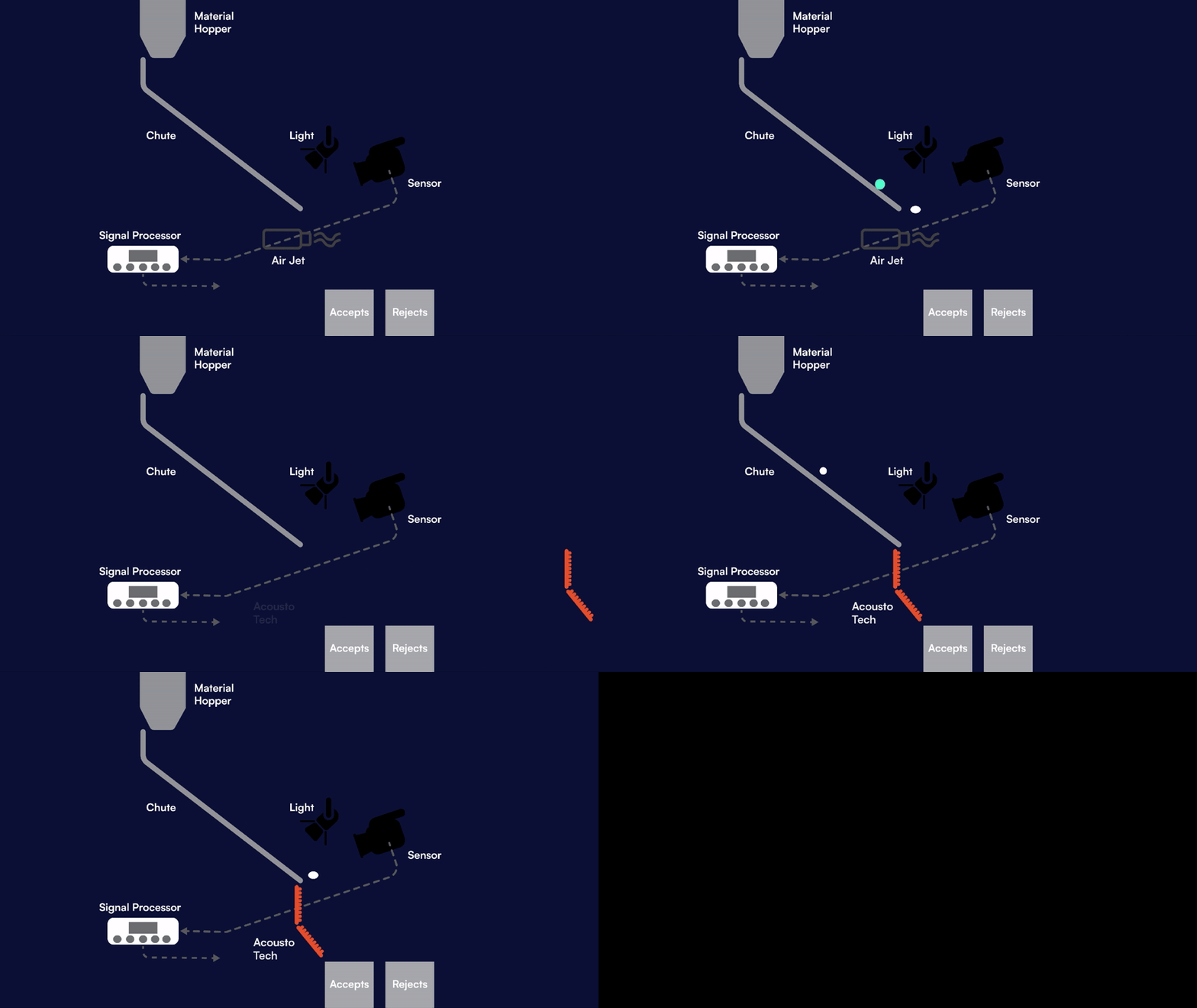
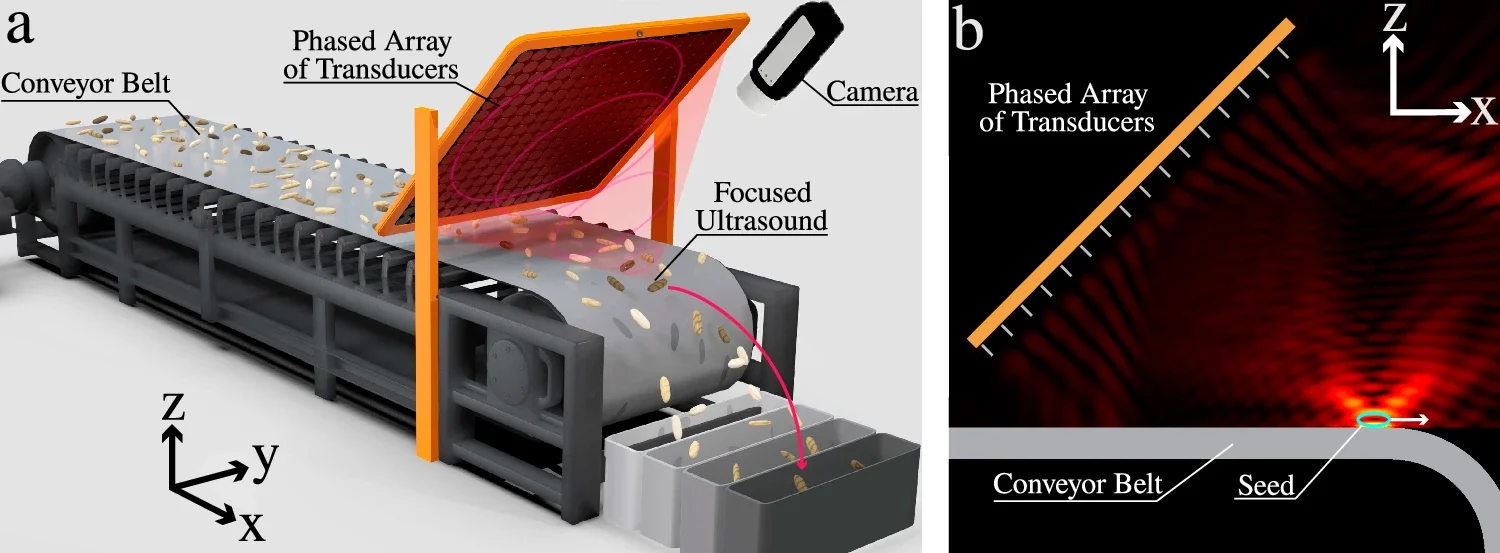
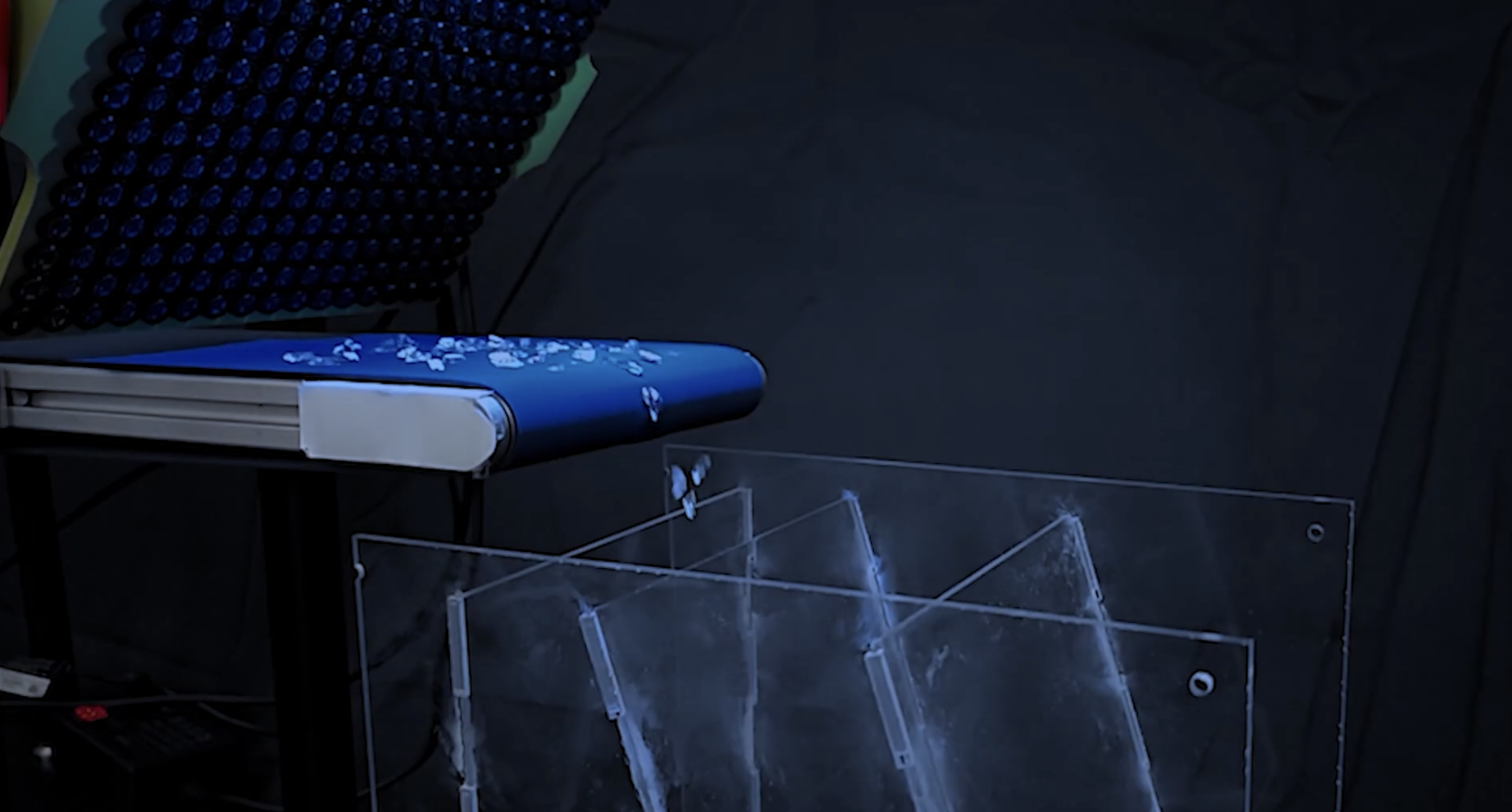
Instead of using air jets to physically blast objects from a conveyor or free-fall stream, WaveSort uses focused acoustic radiation forces to redirect selected items without contact. It works alongside existing optical, hyperspectral, laser, NIR, RGB, or AI-based inspection systems: your sensor identifies the object, WaveSort executes the ejection.
For OEM engineers, this is a new actuator layer. For plant operators, it is a route away from compressors, valves, nozzles, leaks, noise, and downtime. For sorting systems, it is the shift from pneumatic actuation to programmable acoustic force.
Built for Modern Optical Sorting
WaveSort is designed to close the gap between high-resolution sensing and outdated pneumatic actuation. It provides a programmable, solid-state alternative to air jets for applications where precision, flexibility, noise, maintenance, and energy use matter.
-
![Text says 'Time to get started' with an orange stopwatch icon showing the time at 4:00.]()
High-Speed Acoustic Actuation
A 40 kHz ultrasonic phased array with high-speed field updates for rapid, targeted ejection events.
-
![Blue concentric rings logo with the word "GOVERNMENT" in capital letters beneath it.]()
Non-Contact Deflection
Focused acoustic pressure applies force without mechanical impact, gripping, or compressed-air blast.
-
![A diagram with a central cube and arrows pointing outward in six directions.]()
Multi-Bin Sorting
Adjustable acoustic force profiles allow variable ejection distances, enabling sorting beyond simple accept/reject decisions.
-
![Logo featuring blue three-dimensional cubes arranged in a zigzag pattern with dark outlines.]()
Modular Scaling
Multiple 16 × 16 transducer modules can be tiled or configured for different conveyor widths, chute geometries, and free-fall sorting formats.
-
![The image shows a stylized diagram of a molecule with four orange circles connected by curved lines, representing atoms or groups, with the text 'Molecule Structure' above it.]()
Sensor-Agnostic Integration
WaveSort is designed to work with existing optical inspection and machine-vision systems. The host system provides timing and object-location data; WaveSort provides the actuation.


Product Snapshot
WaveSort is a compact acoustic ejection subsystem designed for integration into industrial sorting machines.
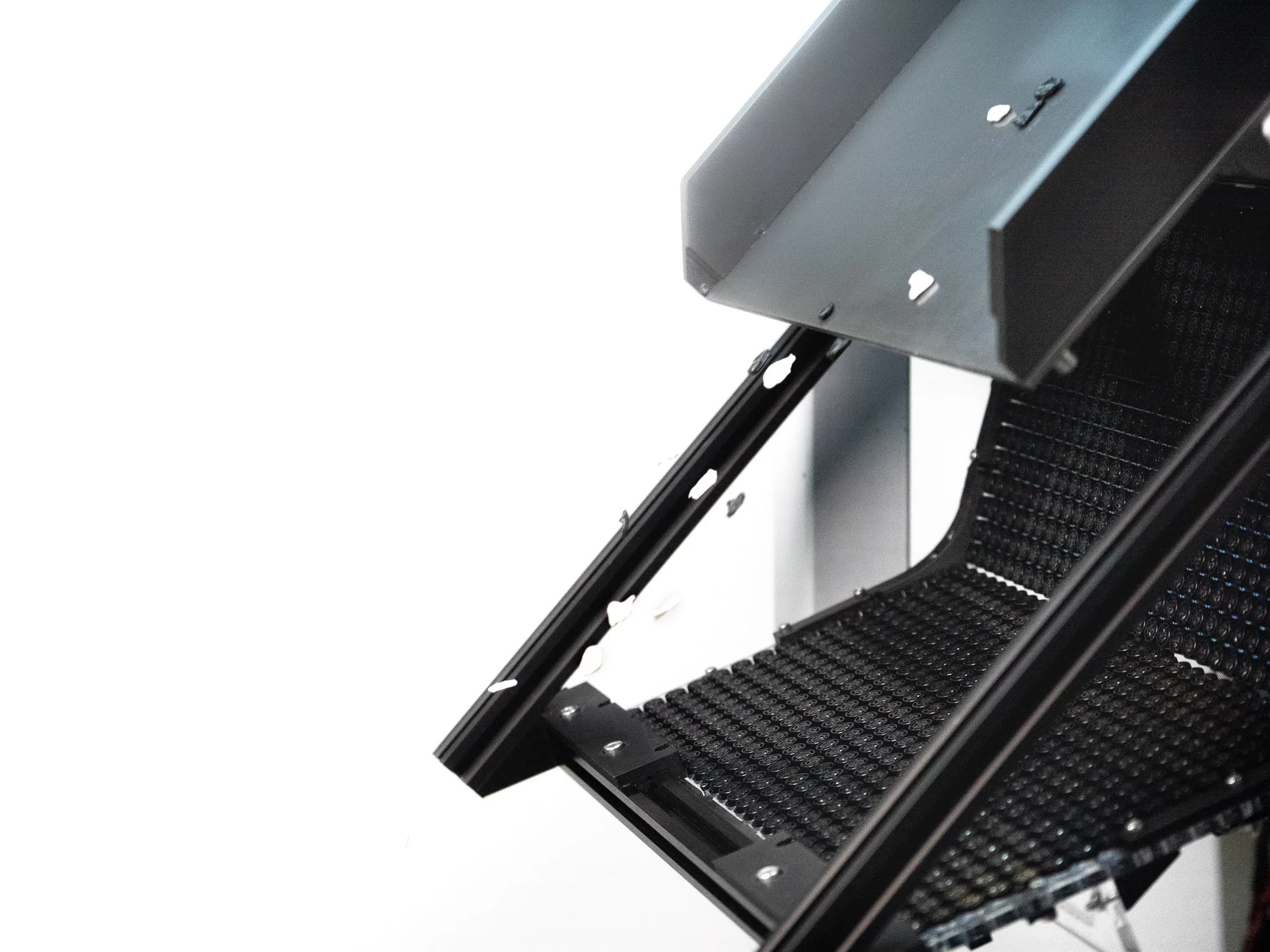
Core Specifications
Operating frequency: 40 kHz
Transducer array: 256 ultrasonic transducers
Update rate: 10,000 Hz
Maximum pressure output: 3,500 Pa
Power draw: 30 W
Loudness: approximately 55 dB
Operating range: 2–20 cm
Optimal range: approximately 12 cm
Control protocol: USB-C / custom integration
Module dimensions: 195 × 195 × 60 mm
Module mass: 1.52 kg
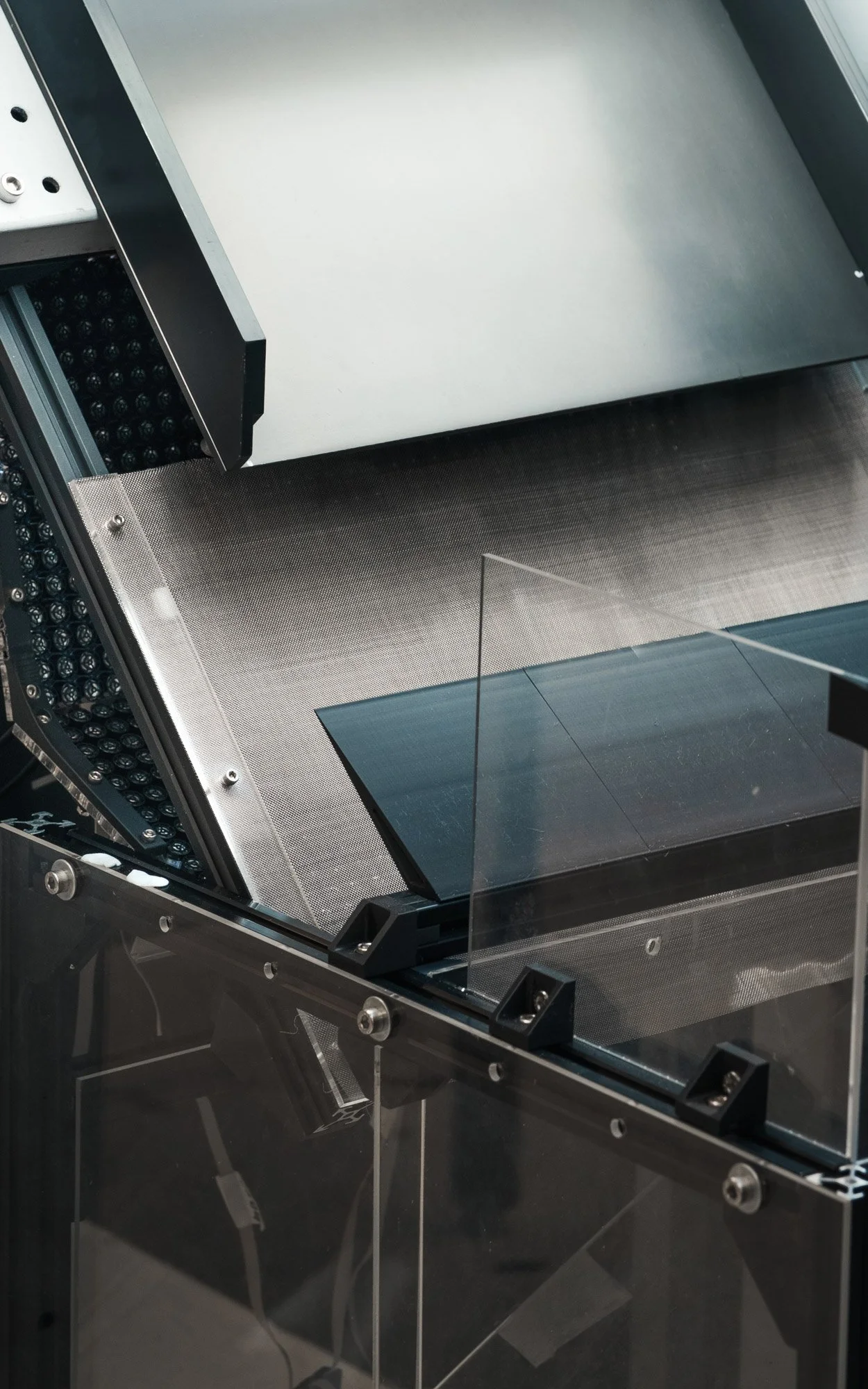
Designed For
Conveyor-end sorting
Free-fall sorting
Seed and grain sorting
Small-particle sorting
Multi-bin classification
OEM integration
Pilot deployments and feasibility studies

The Drop-In Alternative to Pneumatic Ejection
How Acoustic Sorting Works
Acoustic ejection replaces pneumatic impulse with programmable ultrasound.
-
Detect
Your existing sensor or vision system identifies the target item and determines its location, speed, and sorting decision.
-

Trigger
The host system sends timing and position data to WaveSort through the integration interface.
-
Eject
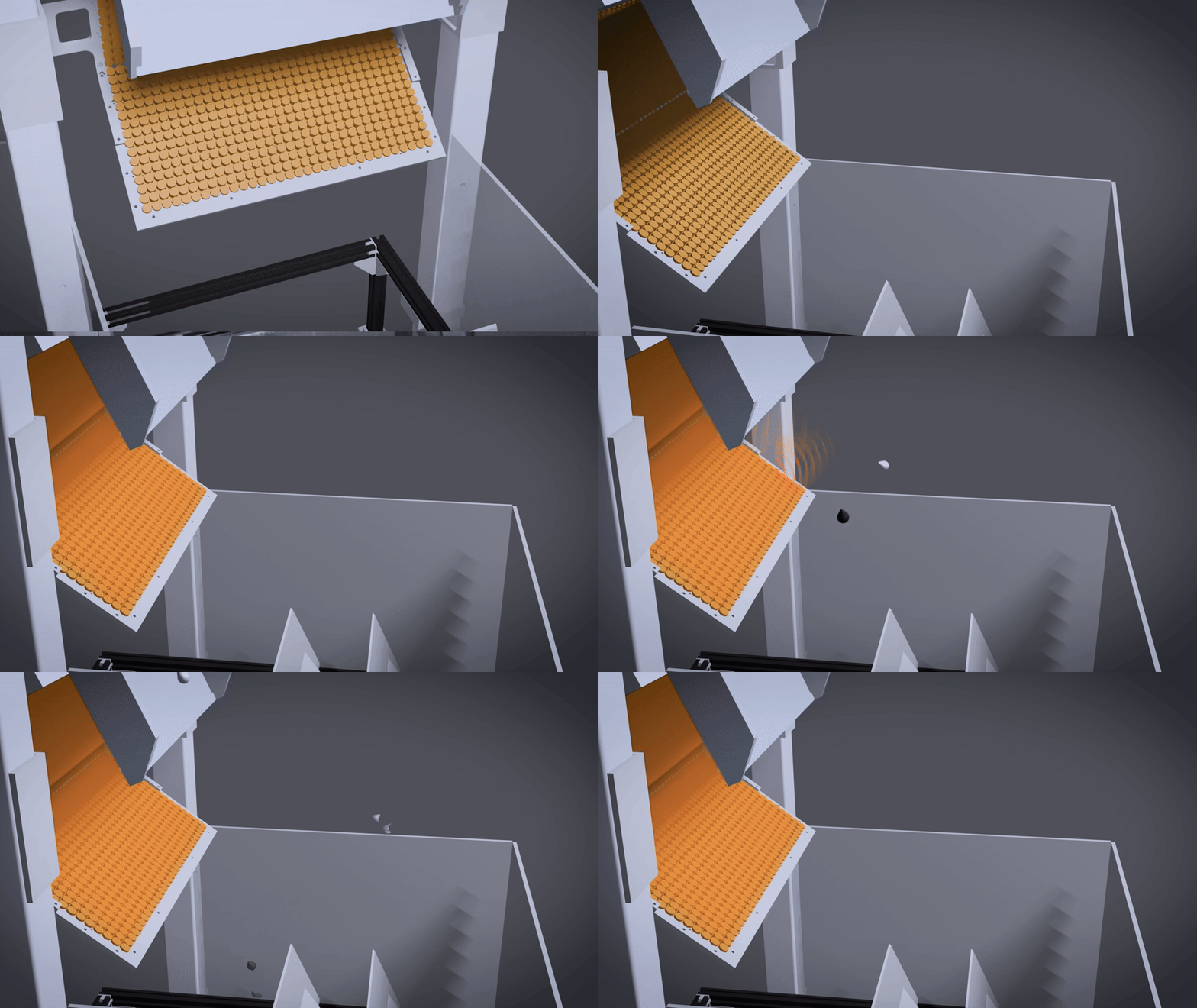
WaveSort generates a focused acoustic pressure field that applies controlled radiation force to the selected item.
-
Classify
By varying the acoustic force profile, the system can direct items into different trajectories or bins.
This enables:
high-speed sorting without pneumatic delay
adjustable force profiles for different materials
binary or multi-bin classification
non-contact handling of fragile items
rapid switching between sorting recipes
Unlike fixed pneumatic ejectors, WaveSort can act across a controlled acoustic volume, allowing engineers to tune the actuation event to the material and machine geometry
Integration Package
A Commercial Subsystem for OEMs and Pilot Lines
WaveSort is designed to be integrated as a sorting actuator, not as a full replacement machine. OEMs can add acoustic ejection to existing inspection and conveyor architectures, while operators can evaluate WaveSort as a retrofit or pilot subsystem.
Standard Module Includes
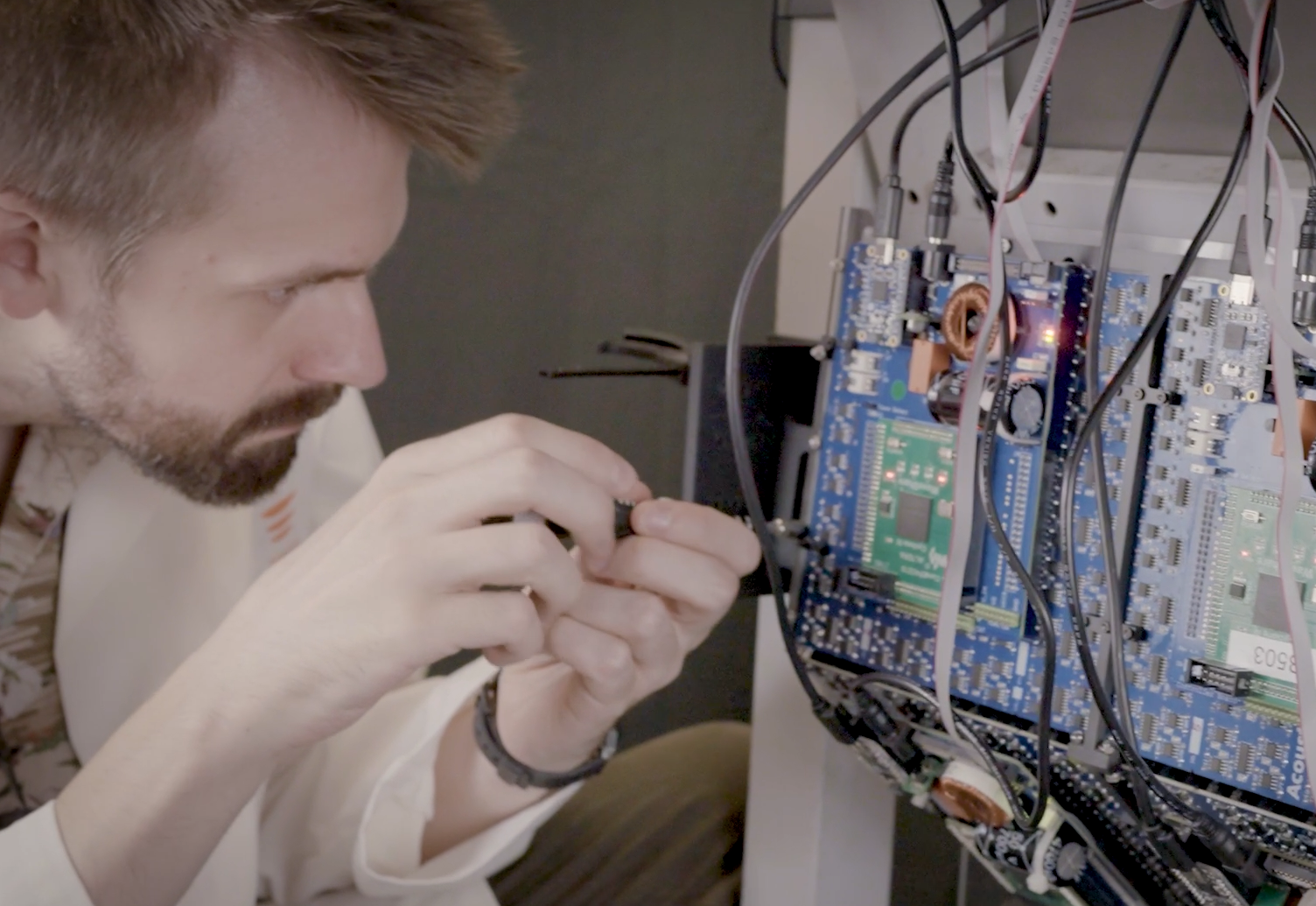
16 × 16 Ultrasonic Phased Array: A 256-transducer acoustic module for focused ultrasound generation and programmable ejection.
Embedded Control Electronics: On-board processing and control for real-time acoustic field updates.
Integration Interface: USB-C or custom control interface for receiving timing, position, and ejection commands.
Mechanical Integration Assets: CAD-ready mounting information and engineering documentation for conveyor-end, chute, or free-fall configurations.
Developer API: Simple command structure for timing, position, pulse duration, and force modulation.
Optional Extensions
OEM partners can extend system capability through:
multi-bin force-profile tuning
material-specific acoustic calibration
custom mounting and enclosure design
conveyor or chute geometry optimisation
vision-system timing integration
dust and environmental protection design
engineering support for pilot deployment
Deployment Path
From Feasibility to Pilot Integration
WaveSort is best deployed through a staged engineering process.
-
1. Material Assessment
We evaluate object size, density, shape, spacing, presentation method, and target sorting categories.
-
2. Acoustic Feasibility Test
We test whether acoustic force can achieve the required deflection under realistic timing and geometry constraints.
-
3. Pilot Module Integration
A WaveSort module is integrated with your inspection system, conveyor, chute, or free-fall rig.
-
4. Throughput and Yield Validation
We measure separation performance, purity, yield, latency, and robustness under representative operating conditions.
-
5. OEM or Line Deployment
Successful pilot configurations can be extended through module tiling, custom integration, and application-specific engineering.

Validation and Research Foundation
WaveSort builds on AcoustoFab’s peer-reviewed research in acoustic manipulation, phased-array control, and acoustophoretic sorting.
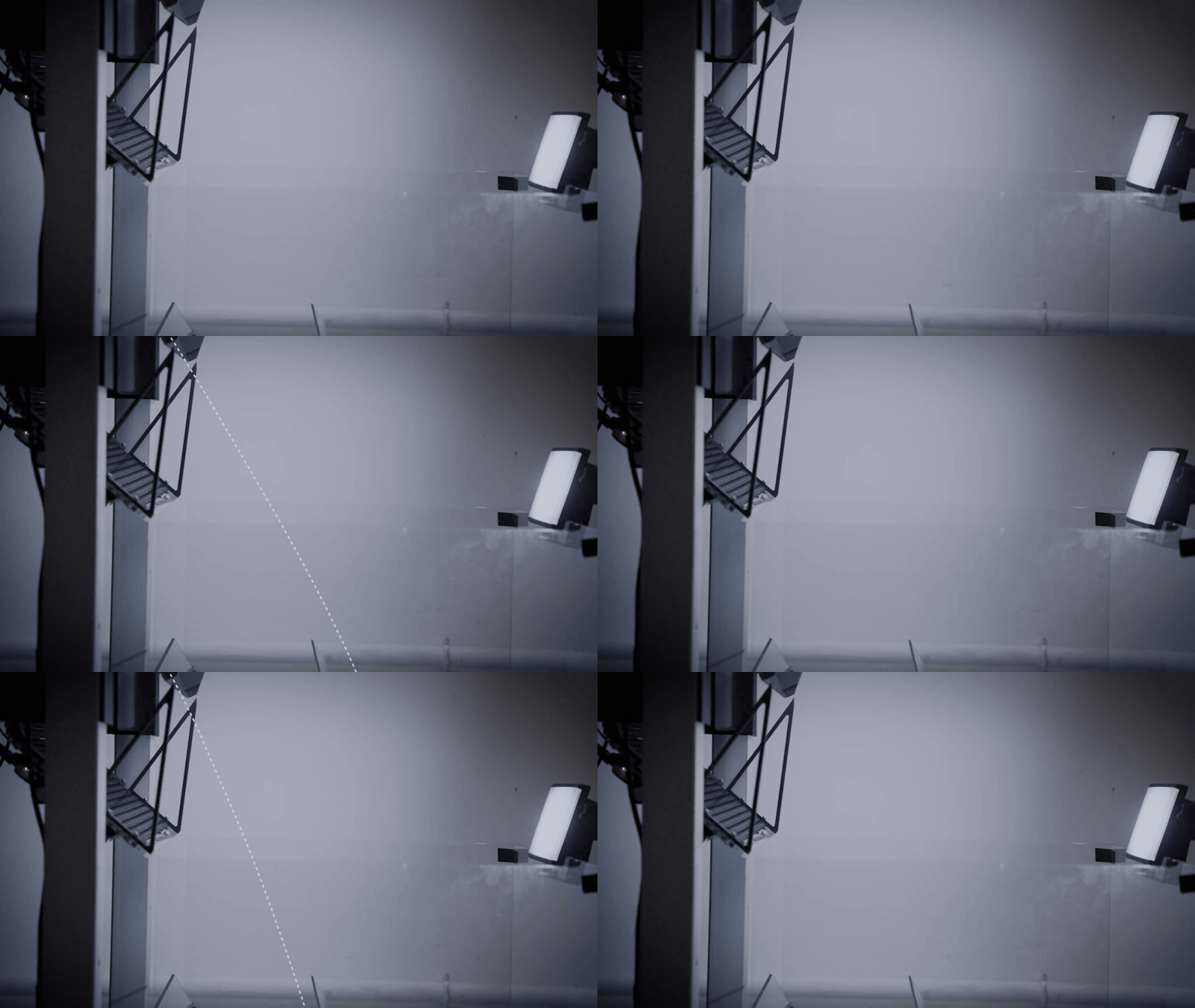
The underlying sorting approach has been validated using camera detection and focused ultrasound to selectively eject seeds from conveyor belts. Demonstrations include variable ejection distances, detritus removal, and multi-category sorting based on visual features such as colour and size.
Resources
Expert Insight from Our Engineering Team
“Acoustic ejection replaces compressed air with a programmable force. No air nozzles, no valve block, no pneumatic delay. It gives OEMs a direct path to make existing optical sorters quieter, cleaner, and more flexible.”
— Dr James Hardwick, Lead Engineer, AcoustoFab
FAQs
-
In selected applications, yes. WaveSort is designed as an acoustic alternative to pneumatic ejection for small objects and particles where acoustic force can provide sufficient deflection. The right deployment depends on object size, density, shape, spacing, belt speed, and sorting geometry.
-
No. WaveSort is an actuation subsystem. It is designed to work with existing or new optical, hyperspectral, laser, RGB, NIR, or AI-based inspection systems.
-
The system needs object timing, location, and sorting decision data. The host vision or AI system identifies the object; WaveSort executes the acoustic ejection event.
-
Yes. Acoustic force can be modulated to create variable ejection distances, enabling multi-bin sorting rather than only binary accept/reject decisions. The number of practical output categories depends on object properties and machine geometry.
-
WaveSort is initially focused on seeds and small particles, but the same principle may be adapted for plastics, minerals, fragile components, powders, granules, and other lightweight objects. Feasibility testing is required for each material class.
-
Throughput depends on object spacing, presentation method, belt speed, ejection distance, material properties, number of modules, and host-system latency. WaveSort supports high-speed acoustic update rates and modular scaling, but industrial throughput should be validated under representative conditions.
-
WaveSort has no pneumatic nozzles or valves at the ejection point, reducing the clogging and wear mechanisms associated with air-jet systems. Protective enclosures and environmental design can be developed for dusty or harsh settings.
-
WaveSort uses ultrasound at 40 kHz and is designed to be quiet compared with pneumatic ejection. Acoustic safety, shielding, and enclosure design should be considered as part of integration.

Future-Proof Your Sorting Line
Compressed air is one of the hidden inefficiencies in modern sorting.
WaveSort replaces pneumatic ejection with a solid-state, software-defined acoustic actuator designed for quieter operation, lower maintenance burden, reduced compressed-air dependence, and multi-bin sorting.
If you are building the next generation of optical sorters, or upgrading an existing line, WaveSort gives you a new actuation layer without replacing your sensing stack.