
Contactless Powder & Particle Handling
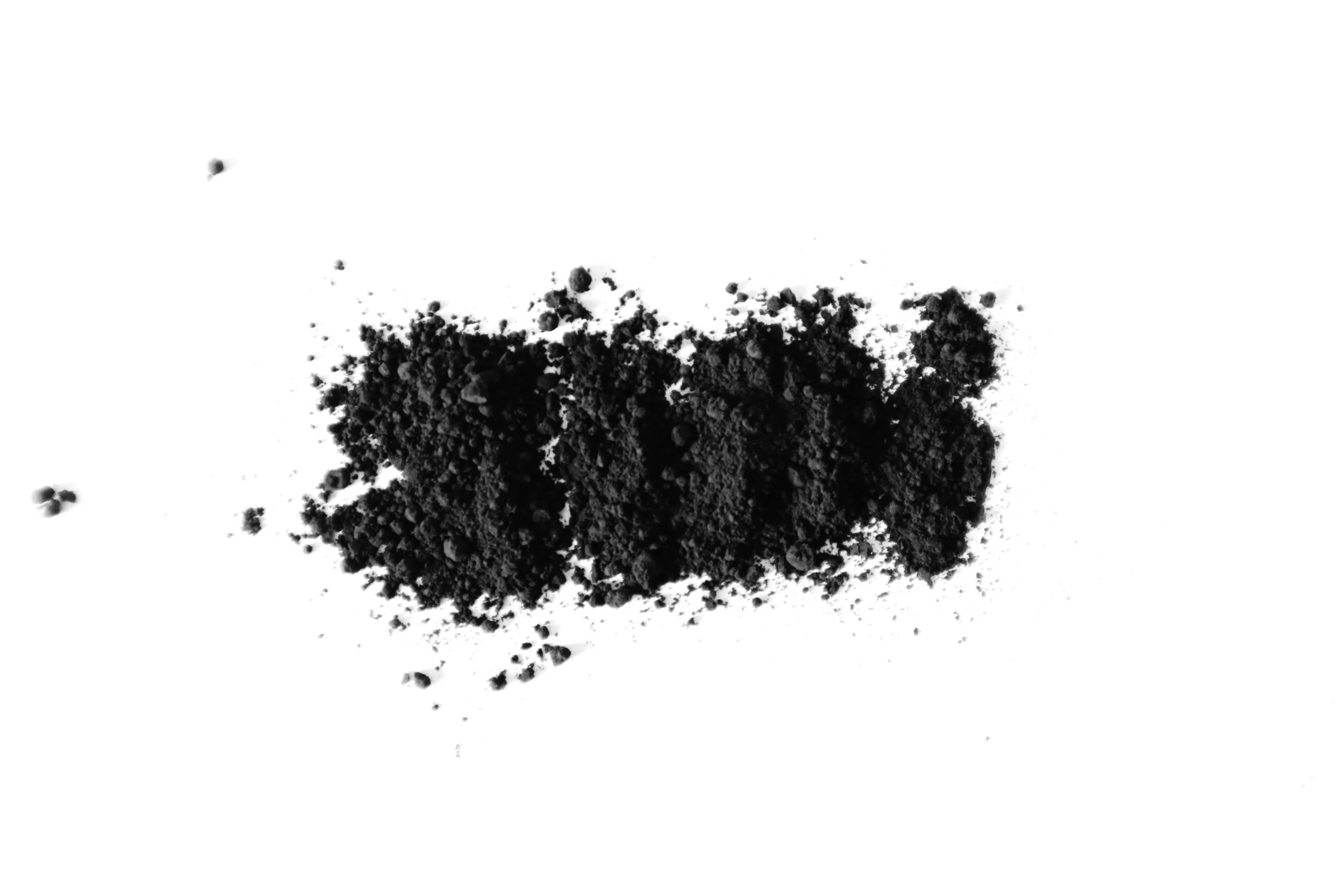
Powders are some of the hardest materials to automate. They stick. They clump. They segregate. They charge. They contaminate surfaces. They waste valuable material.
In pharmaceutical development, formulation science, advanced materials, catalyst screening, food research, and analytical sample preparation, powders often behave less like simple solids and more like unstable systems. A powder bed can flow like a liquid, jam like a solid, disperse like an aerosol, or collapse into agglomerates depending on particle size, humidity, charge, and surface chemistry.

Move, Dose, Coat, and Study Difficult Powders Without Mechanical Contact.
Conventional powder handling depends on funnels, hoppers, spatulas, nozzles, augers, vibration, air flow, and mechanical contact. These tools work well for many bulk processes, but they become limiting when powders are scarce, fragile, reactive, hygroscopic, cohesive, or difficult to clean from surfaces.
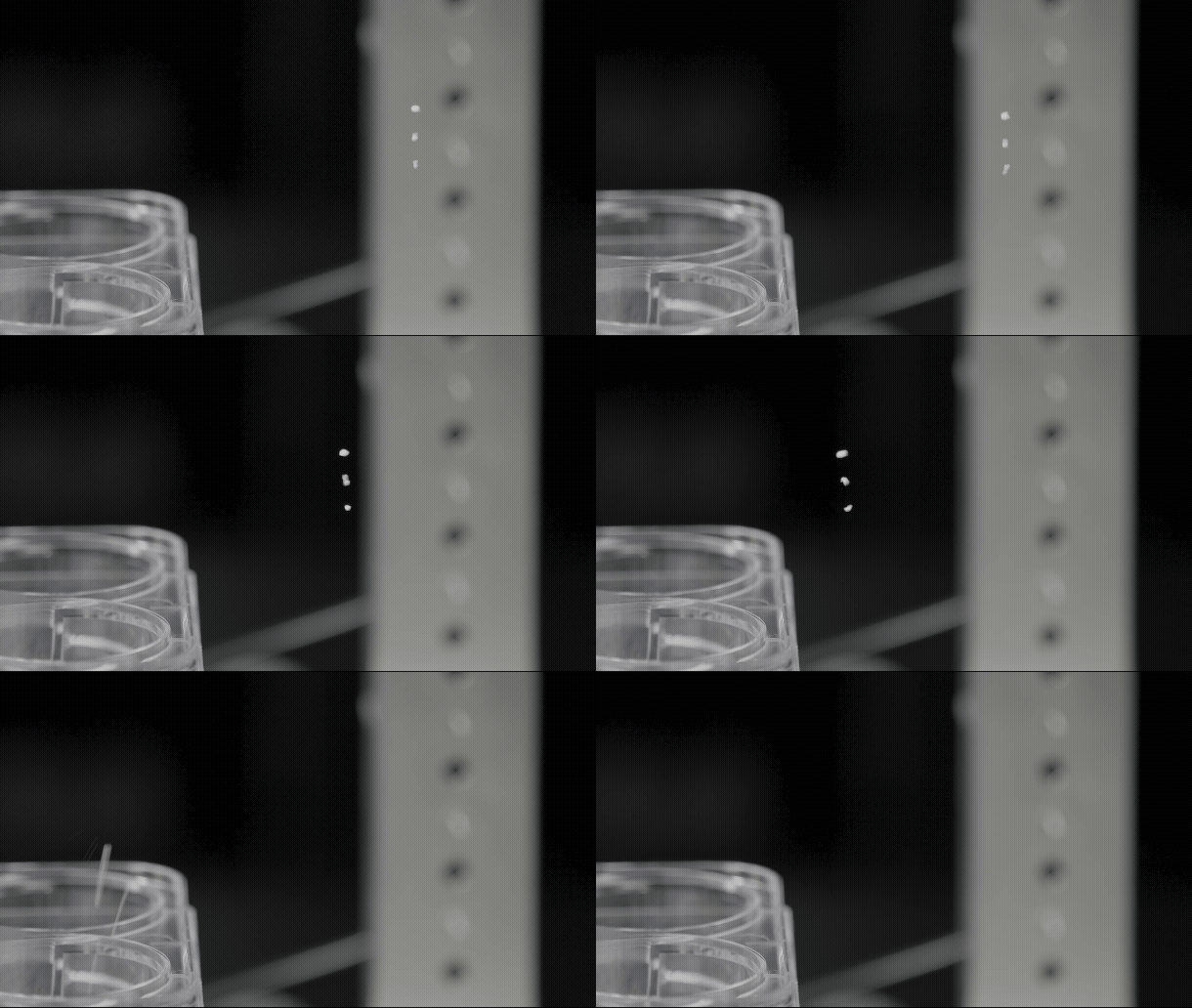
AcoustoFab introduces contactless powder and particle handling using software-defined acoustic fields. Instead of pushing, scraping, blowing, or vibrating powders through contact hardware, acoustic manipulation enables small particles, granules, powder packets, beads, pellets, and fragile solids to be held, moved, observed, coated, or transferred with reduced mechanical contact.
No funnels. No scraping. No hidden residue. For researchers and engineers working with difficult powders, the next frontier is not simply a better feeder. It is a contactless handling environment.
The Powder Handling Problem
Why Powders Limit Precision Automation
Powders are not simple materials. Their behaviour depends on particle size, shape, density, roughness, moisture content, electrostatic charge, cohesion, and environmental conditions. At small scales, forces between particles can become more important than gravity, making powders difficult to feed, dose, transfer, or analyse reproducibly.
-
Cohesion and Clumping
Poor Flowability
Segregation
Electrostatic Charging
Dusting and Material Loss
Residue and Cross-Contamination
These issues are amplified in: pharmaceutical formulation, low-dose API handling, catalyst screening, seed coating and pelleting, food powder research, battery and advanced materials research, micronised powders, hygroscopic or reactive materials, fragile particles, crystals, pellets, and granules, high-value or scarce powder samples.
Researchers searching for better powder dosing, reduced powder loss, improved powder transfer, or cleaner particle handling are often confronting the same underlying limitation: contact.
Contactless Powder Handling with Acoustic Levitation
AcoustoFab uses holographic acoustic fields to create programmable pressure regions in air. These fields can apply force to particles, granules, droplets, and small solids without physical contact. Instead of relying only on mechanical tools, users can explore powder and particle workflows where acoustic forces help position, transfer, dose, align, or observe materials.
-
![A no cellphone use icon showing an orange hand with a finger pointing up, and a diagonal line crossing out a cellphone.]()
Contactless Particle Positioning
Hold or suspend small solids, granules, beads, pellets, crystals, or agglomerates for observation, analysis, coating, or transfer.
-
![Logo of the recovery program with a blue circular arrow surrounding a black letter 'R' and the text 'RECYCLING RE-USE' in black.]()
Powder Packet Transfer
Move small quantities of powder or particle clusters from one location to another while reducing contact with funnels, spatulas, and channels.
-
![Illustration of a safety pin in orange color.]()
Pulsed Micro-Dosing
Explore controlled delivery of small powder packets into vials, wells, capsules, dishes, or analytical zones.
-
![Blue abstract layered geometric logo.]()
Particle Coating and Treatment
Expose a particle, bead, seed, pellet, or tablet to droplets, aerosols, or fine powders without gripping or mechanical abrasion.
-
![Logo of Student Society for Science with stylized orange microscope]()
Direct Optical and Analytical Access
Keep particles accessible for microscopy, imaging, spectroscopy, Raman analysis, or real-time monitoring during handling.
-
![Shield with a check mark inside, symbolizing security or protection.]()
Reduced Surface Exposure
Minimise residue, adhesion, and carryover during sensitive powder-handling steps.






Addressing the Precision Gap in Powder Automation
When powder quantities shrink, conventional handling becomes less reliable. A milligram-scale transfer may be dominated by what remains stuck to a spatula, hopper, tube, or funnel. A cohesive powder may not flow predictably. A micronised powder may charge, agglomerate, or disperse into a dust cloud. A fragile particle may break when mechanically gripped or vibrated.
Even advanced powder automation systems can struggle with: residue on tools and surfaces, inconsistent micro-dosing, bridging and clogging in narrow channels, powder loss during transfer, agglomeration and clumping, electrostatic adhesion, dust generation, particle breakage, poor optical access during processing, difficult cleaning between samples
These are not minor inefficiencies. In formulation science, pharma R&D, catalyst screening, and advanced materials research, they can define whether a workflow is practical at all.

The AcoustoFab Approach
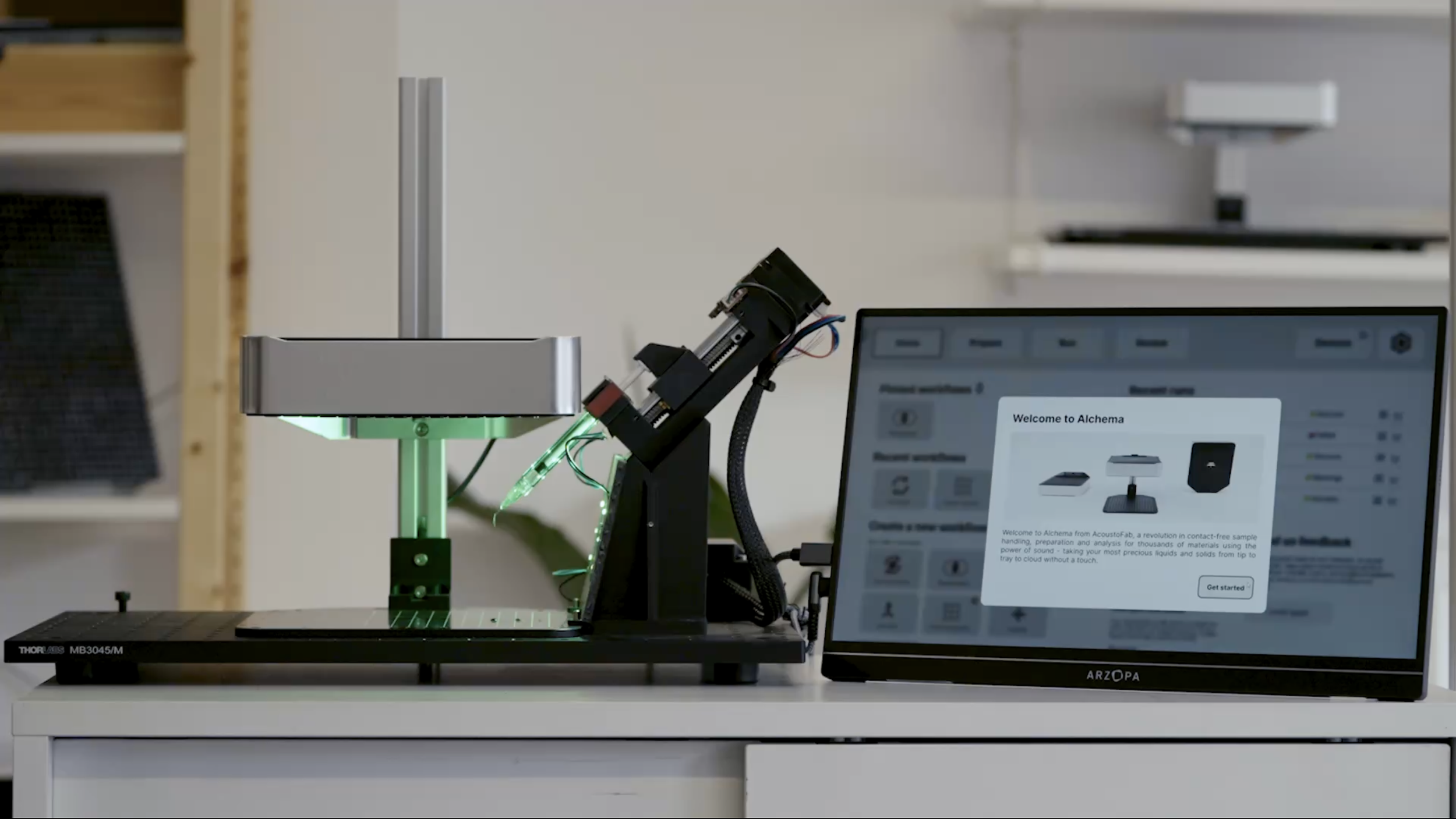
Alchema Research adds a contactless processing zone to powder and particle workflows.
Using programmable acoustic manipulation, researchers can explore ways to handle small solids and powder packets in free space, reducing the number of surfaces and contact steps involved in sensitive handling operations.
This enables: lower-residue transfer of small powder quantities, contactless positioning of fragile particles, controlled particle exposure for coating or treatment, direct observation of particle behaviour, micro-dosing workflow development, reduced dependence on funnels, spatulas, and narrow channels, exploratory handling of cohesive or high-value powders.
AcoustoFab is not simply replacing a scoop, funnel, or feeder. It enables a different class of powder experiment, where particles can be handled without being defined by the surfaces they touch.
The Benefits for Powder and Particle Workflows
-

Reduced Contact and Residue
Minimise adhesion to tools, funnels, tubes, and containers during sensitive low-volume powder handling.
-

Improved Recovery of High-Value Materials
Reduce avoidable loss when working with scarce APIs, catalysts, powders, crystals, granules, or engineered particles.
-

Gentler Handling of Fragile Solids
Manipulate delicate particles, crystals, beads, seeds, pellets, or granules without mechanical gripping, scraping, or abrasion.
-

Cleaner Analytical Access
Observe powders and particles in a wall-less environment using microscopy, imaging, spectroscopy, or Raman techniques.
-

Programmable Micro-Dosing
Explore software-defined delivery of small powder packets into vials, wells, capsules, dishes, or analytical zones.
-

Support for Coating and Treatment
Enable contactless exposure of particles, seeds, beads, tablets, or pellets to droplets, powders, coatings, or reactive environments.
Evidence from Advanced Materials and Contactless Fabrication Research
Acoustic levitation and acoustic manipulation have been used to study and process materials in ways that are difficult to achieve with conventional vessels, nozzles, or substrates.
Resources
-
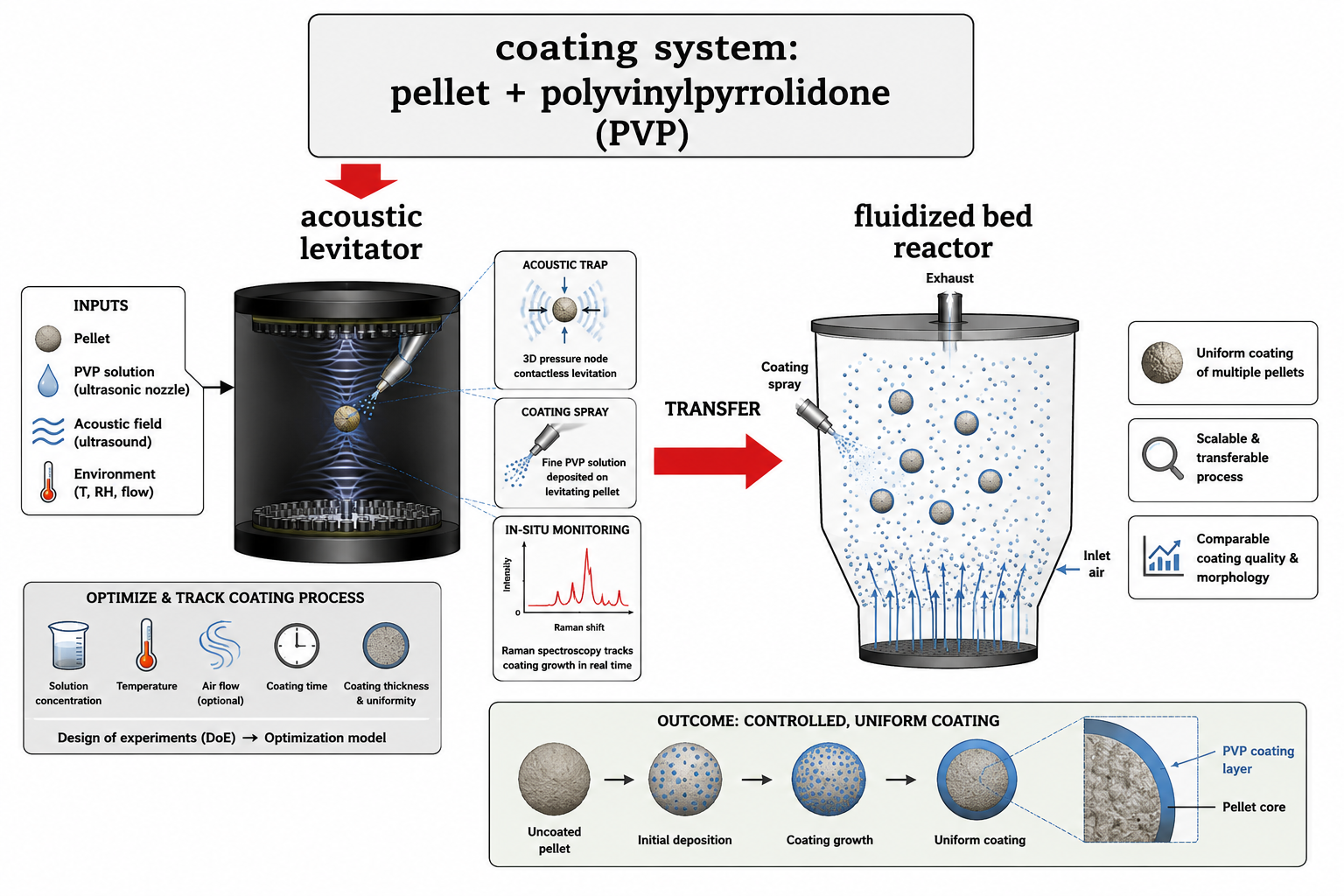
Read Contactless Coating of Pharmaceutical Pellets Using Acoustic Levitation
-
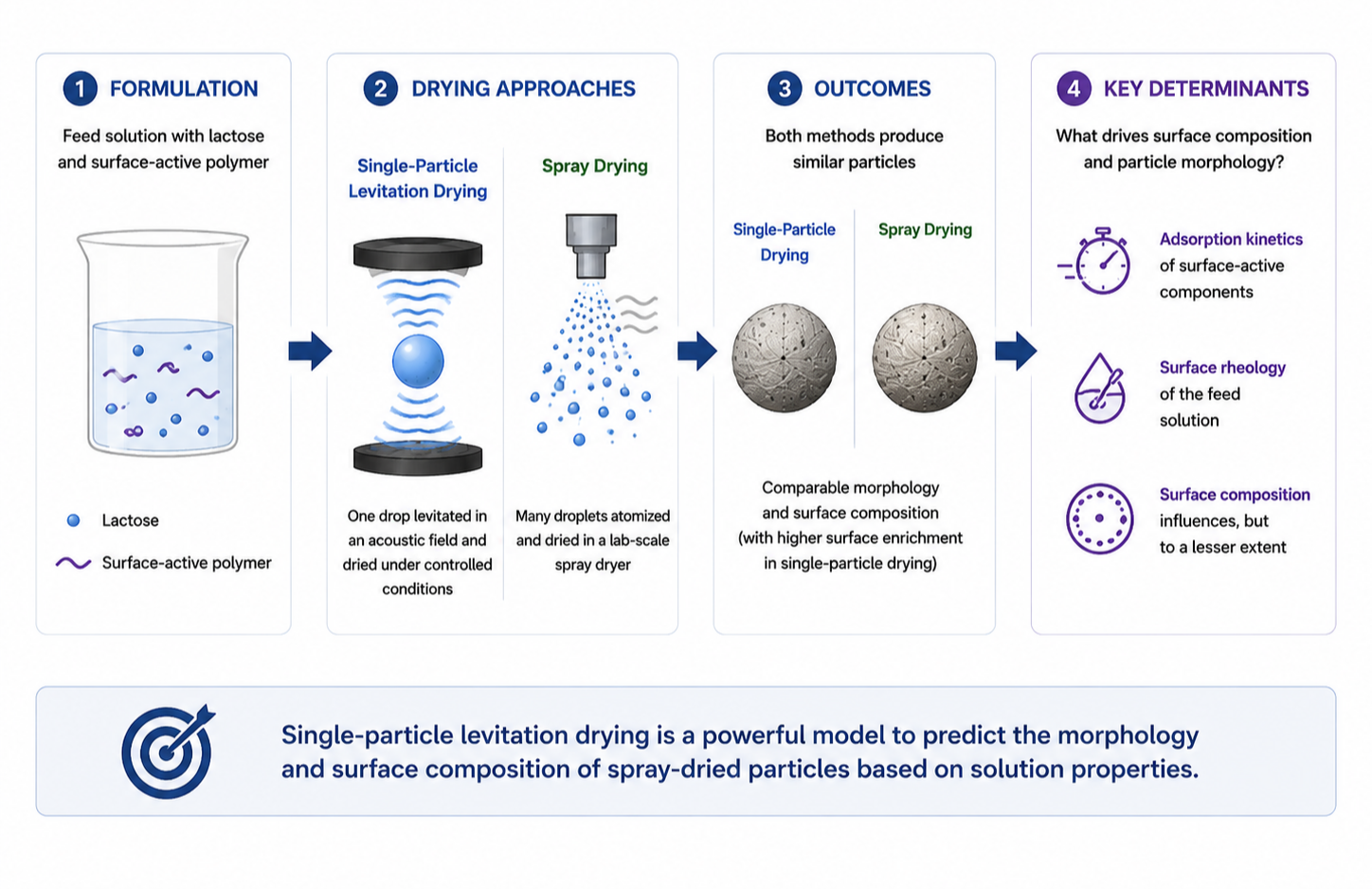
Read Single-Particle Drying as a Model for Spray-Dried Powder Morphology
-
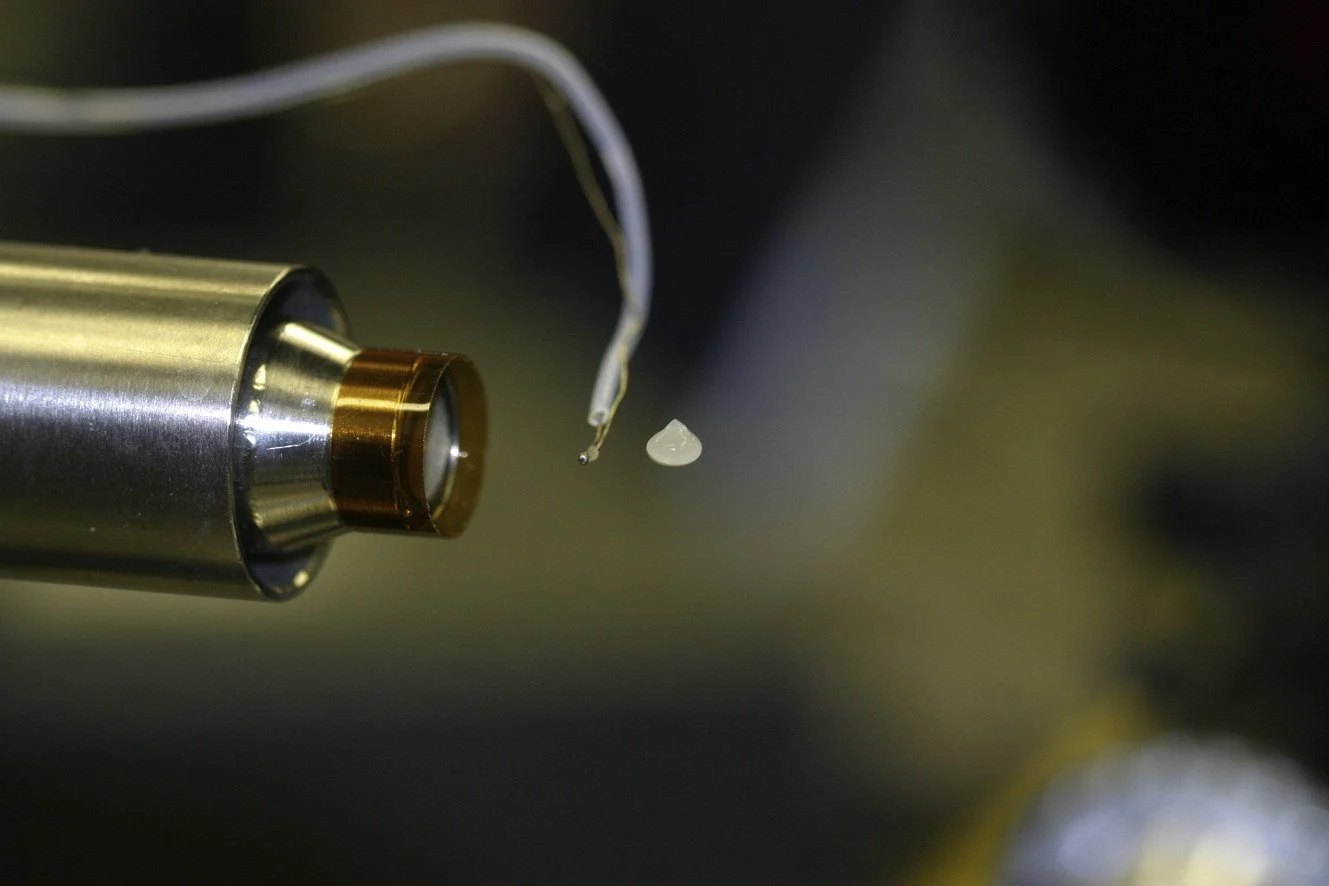
Read Containerless Development of Amorphous Pharmaceutical Powders
-
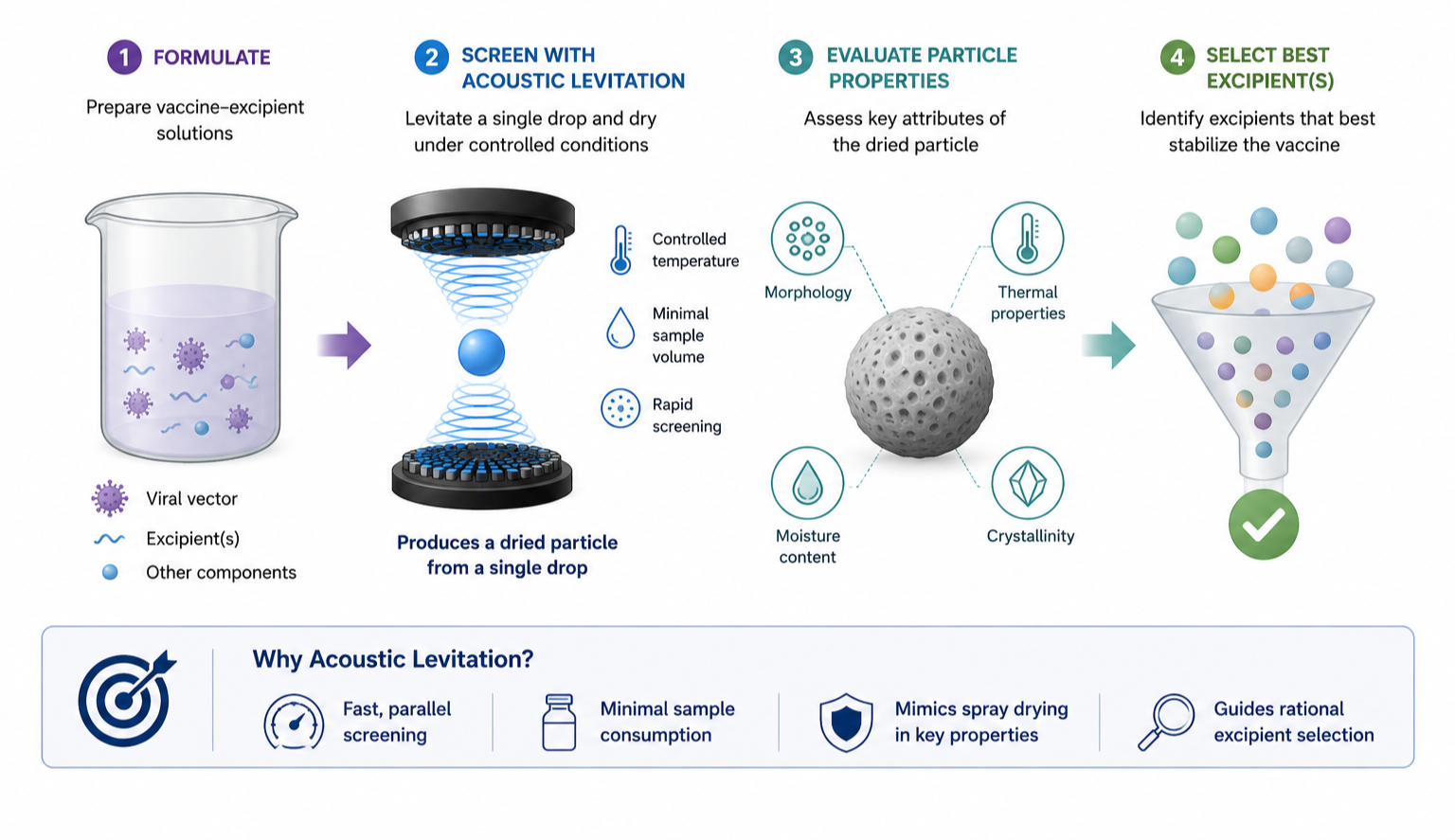
Read Acoustic Levitation Screening for Dry Powder Vaccine Formulations
-
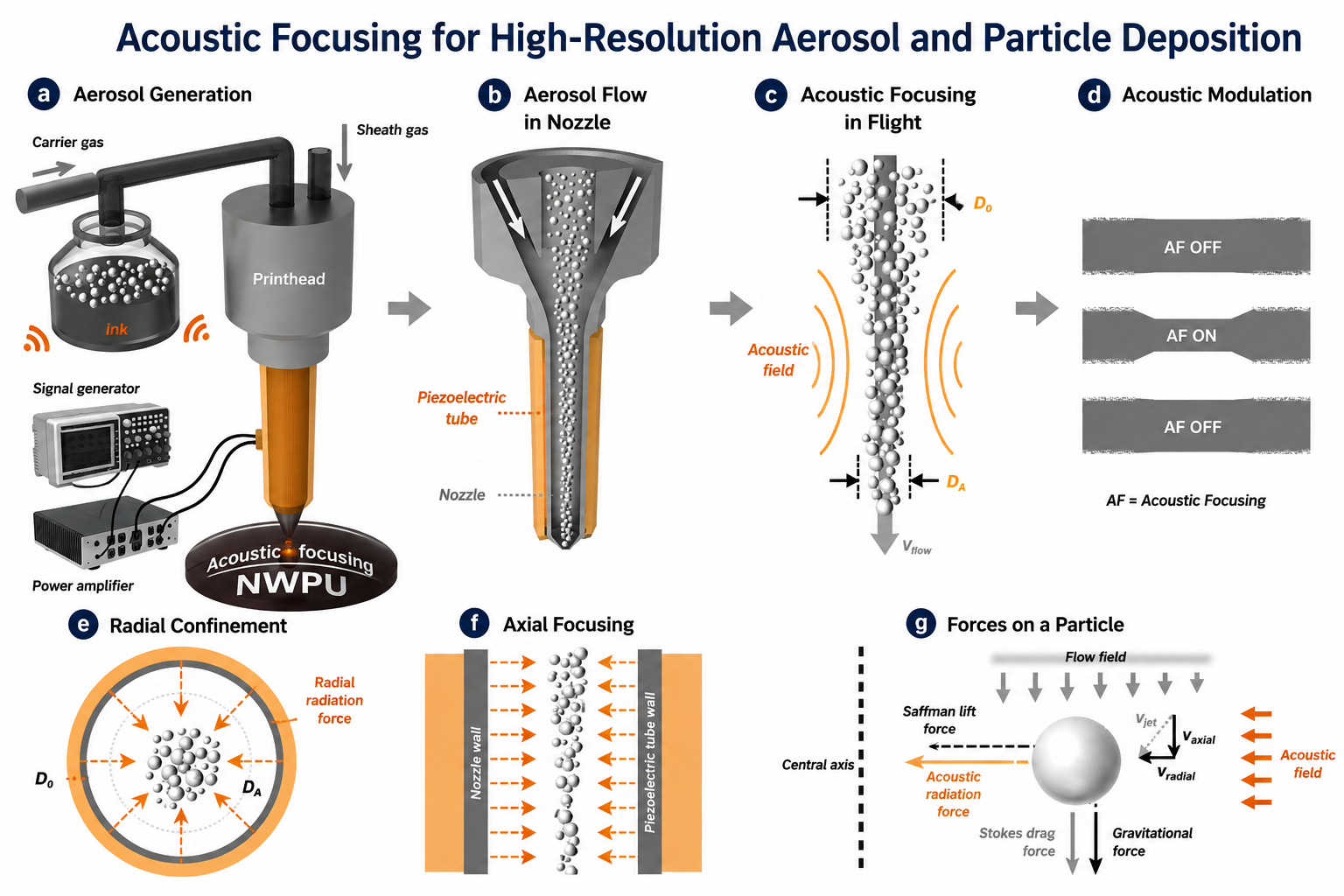
Read Acoustic Focusing for High-Resolution Aerosol and Particle Deposition
-
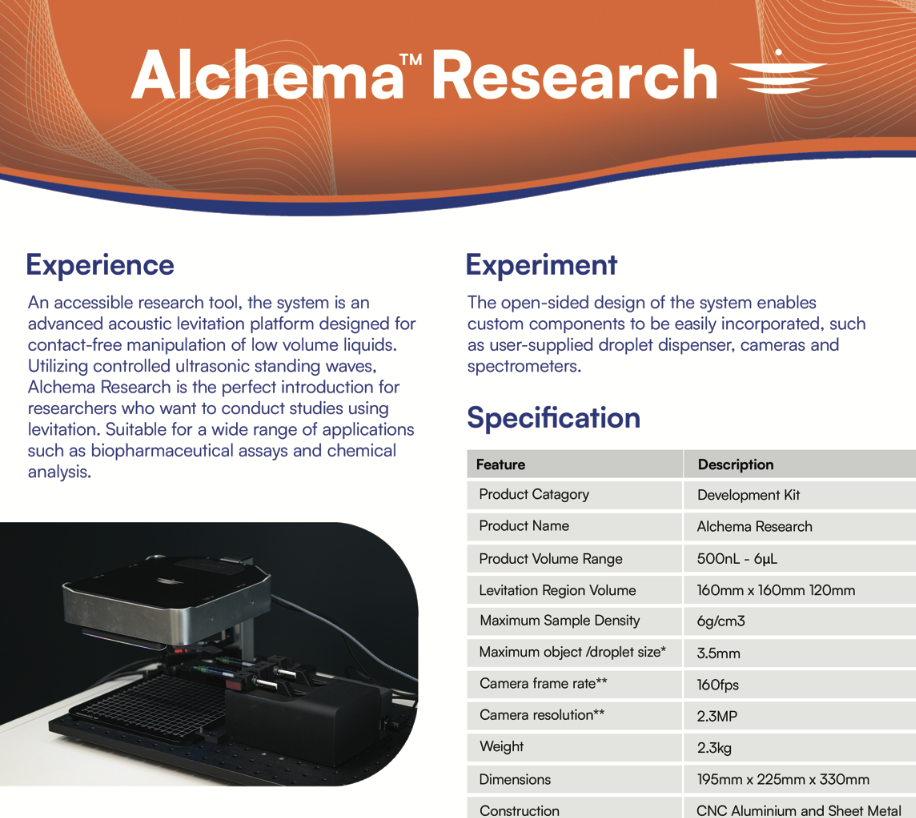
Download the Alchema Research Product Brochure
From Powder Workflow to Platform Integration
AcoustoFab enables both immediate exploratory use and longer-term workflow development.
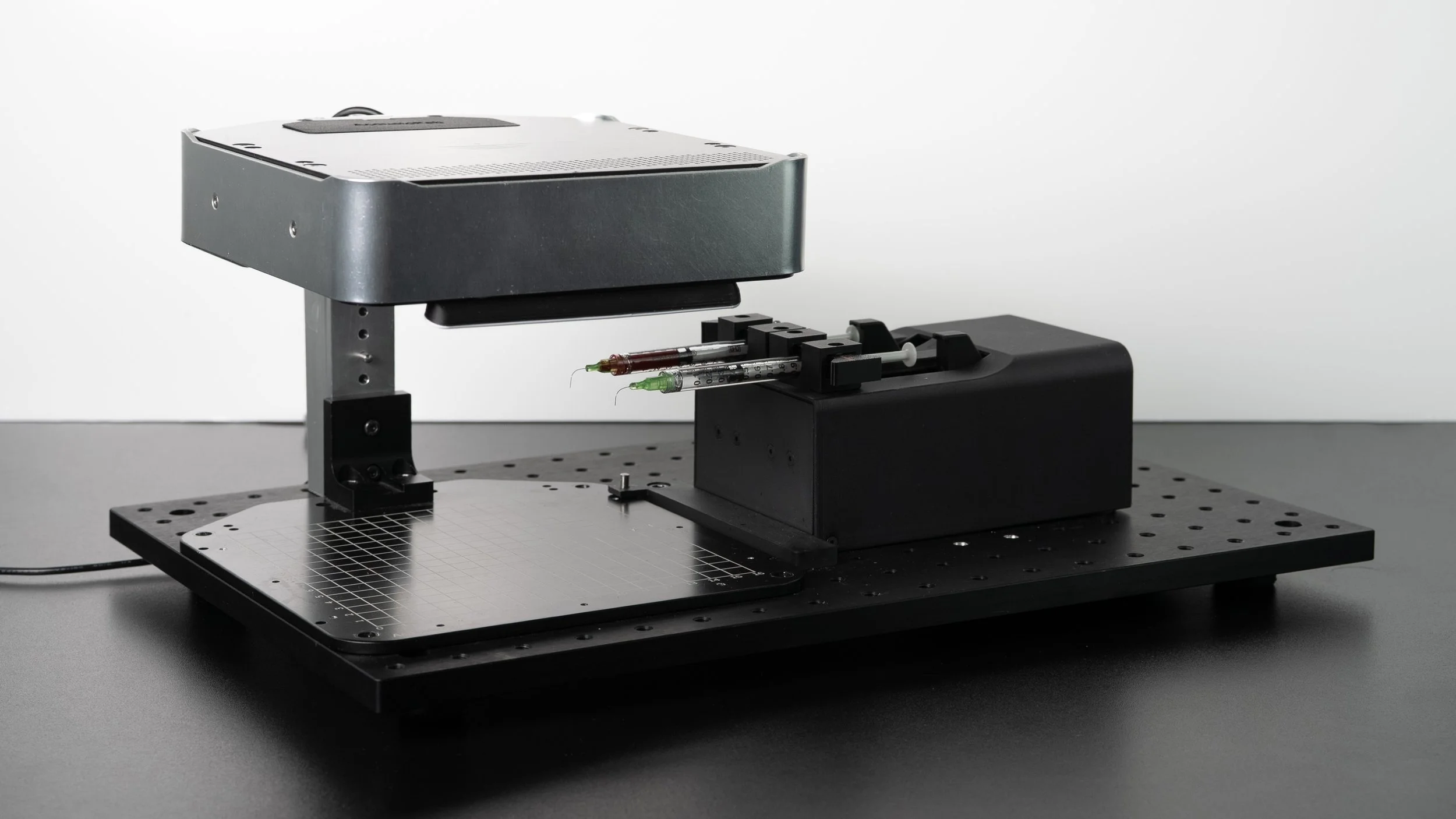
Alchema Research
A programmable contactless handling platform for low-volume droplets, fragile solids, particles, and powder-adjacent workflows.
Alchema Research supports operations such as holding, moving, merging, depositing, and observing small samples in free space, making it suitable for early-stage exploration of powder transfer, particle handling, coating, and analytical workflows.
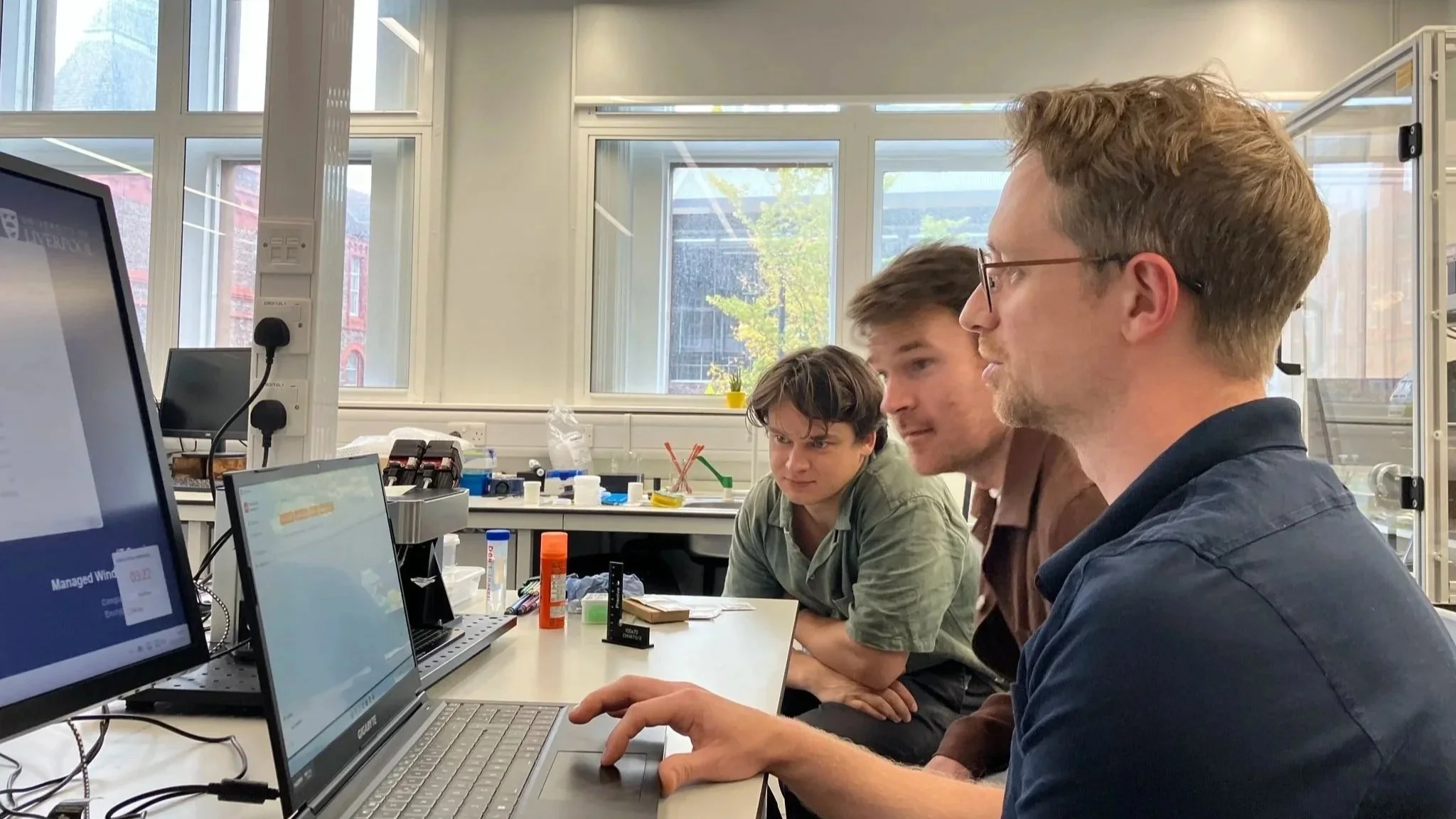
Co-Development
Work with AcoustoFab’s engineering team to adapt acoustic workflows for specific powders, particles, formulations, or integration requirements.
Co-development can support:
acoustic field optimisation for particle size, density, and shape
micro-dosing and powder transfer feasibility studies
integration with imaging, microscopy, Raman, or spectroscopy
coating and particle-treatment workflow development
humidity, evaporation, and environmental control strategies
custom automation and OEM integration

Why Powder Handling Is Moving
Beyond Contact Tools
Hoppers improved feeding. Micro-dosing systems improved precision. Automation improved repeatability.
But difficult powders still stick, clump, segregate, charge, contaminate surfaces, and waste material.
For many powder workflows, the challenge is no longer just moving material from one container to another. It is preserving control over the material while reducing the contact events that create loss, residue, contamination, and variability.
Researchers exploring alternatives to spatulas, funnels, hoppers, microfeeders, or powder channels are asking the same question.
FAQs
-
Yes, but powder handling is material-specific. Acoustic fields can manipulate particles, granules, pellets, beads, crystals, agglomerates, and small powder packets. Fine powders can be more challenging because cohesion, electrostatics, humidity, and dusting strongly affect behaviour.
-
Not initially. AcoustoFab is best suited to low-volume, high-value, difficult, fragile, or research-stage powder workflows where contact, residue, loss, or contamination are major constraints. Bulk powder handling may require application-specific development.
-
Not universally. Acoustic fields can move, disperse, or deliberately aggregate particles depending on field design and material properties. For some workflows, agglomeration is a challenge to manage; for others, it can be a useful phenomenon to study or control.
-
The most promising early candidates are small granules, beads, pellets, crystals, fragile particles, engineered particles, powder packets, and high-value powders where low-volume transfer, coating, observation, or reduced contact is valuable.
-
Yes, this is one of the strongest application areas. Acoustic manipulation can support exploratory workflows for delivering small quantities of powder or particles into vials, wells, capsules, dishes, or analytical regions with reduced contact and residue.
-
Yes. A particle, seed, bead, pellet, or tablet can be held or exposed in a contactless environment while droplets, powders, or coating materials are applied. This is relevant to seed treatment, tablet coating, catalyst coating, encapsulation, and formulation research.
-
For selected low-volume workflows, it may provide an alternative or complementary handling step. For many users, acoustic manipulation will initially act as a contactless processing zone alongside conventional powder handling equipment.
-
Yes. Levitated particles and powder packets can remain accessible for imaging, microscopy, Raman spectroscopy, optical inspection, or other analytical techniques, depending on the configuration.

Ready to Handle Difficult Powders Without Contact?
If your powder workflow is limited by sticking, clumping, residue, contamination, or low recovery, the constraint may not be your formulation. It may be your handling environment.
AcoustoFab enables contactless powder and particle manipulation through Alchema Research: a software-defined platform for low-volume droplets, fragile solids, particles, and difficult materials.
Take Action
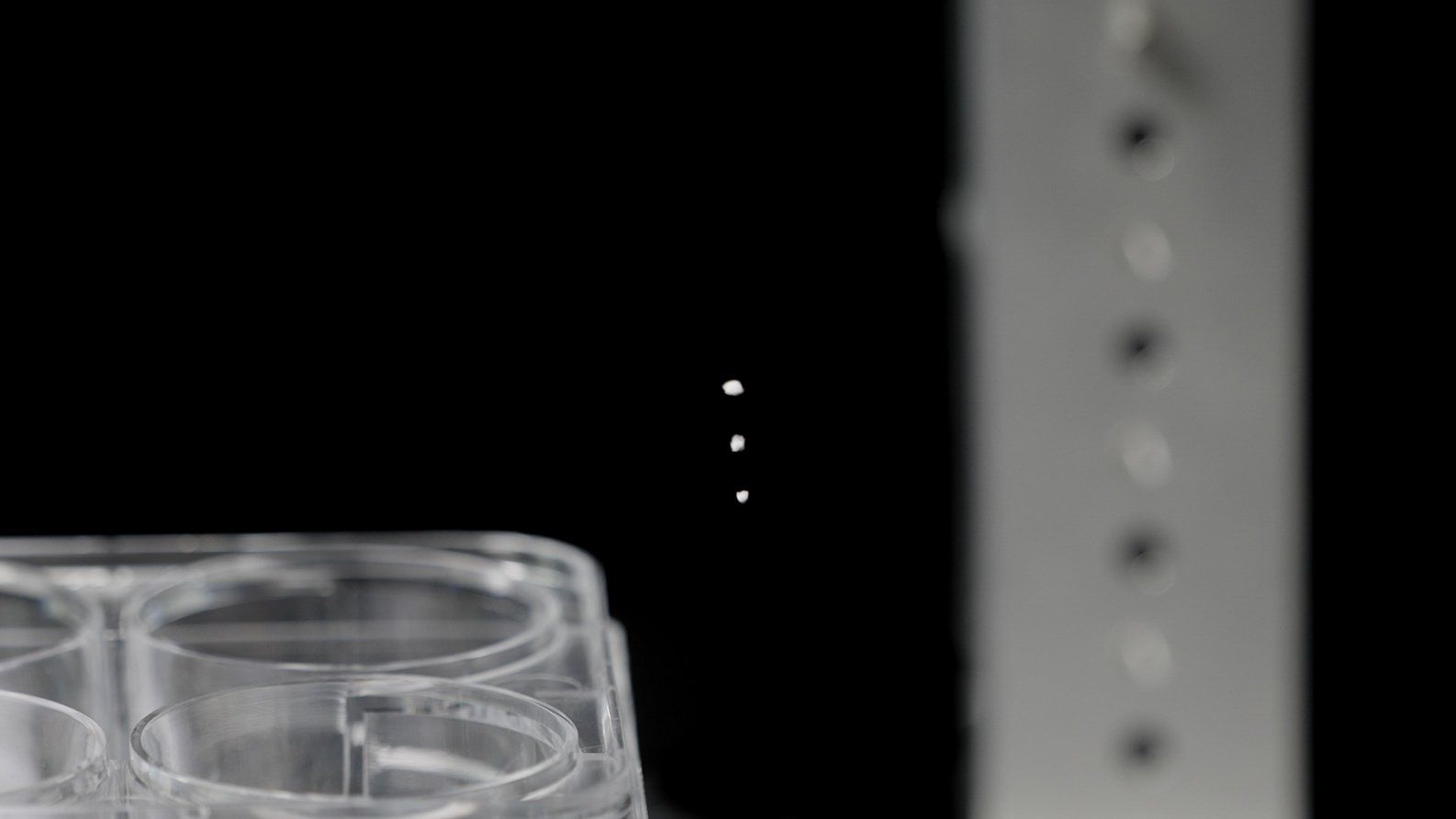
Explore Alchema Research
See the science behind the world’s first contactless workflow platform
Partner With Us
Work with our team to solve your toughest automation challenges
Request a Feasibility Study
Find out if your application is a fit with a tailored technical assessment