
Surface-Free Automation for Proteomics
Modern proteomics has become increasingly sensitive, miniaturised, and data-rich. Sample handling has not kept pace.
In single-cell proteomics, targeted proteomics, structural biology, and low-volume biochemical assays, researchers are often working with scarce material where every surface matters. Pipette tips, tubes, microplates, microfluidic channels, and reservoirs can introduce adsorption, denaturation, carryover, and dead volume before the sample ever reaches the analytical instrument.


Preserve Scarce Samples. Prevent Surface Loss. Protect Protein Integrity.
AcoustoFab introduces containerless sample handling for proteomics research.
Using software-defined acoustic fields, droplets and fragile biological samples can be held, moved, merged, mixed, observed, and deposited in free space. By reducing contact with labware, AcoustoFab helps protect sample integrity and improve recovery in workflows where conventional handling imposes unacceptable losses.
No unnecessary surfaces. No hidden dead volume. No container-driven artefacts.
For researchers working at the limits of detection, the next frontier is not simply faster pipetting. It is surface-free sample preparation.
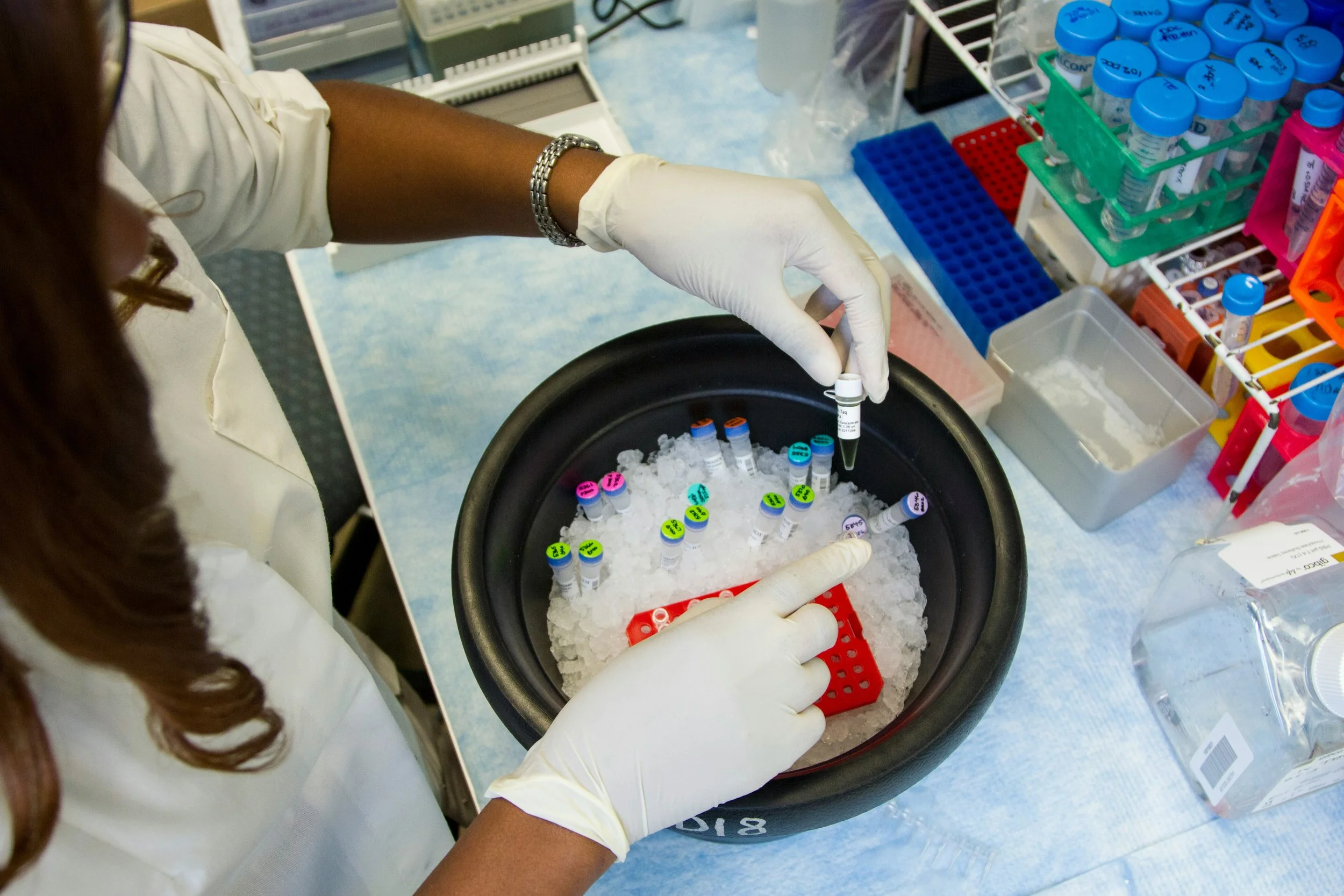
The Surface Problem in Proteomics
Why Containers Limit High-Sensitivity Protein Workflows
Proteomics workflows depend on preserving as much biological information as possible from as little material as possible. At low volumes, conventional labware becomes part of the experiment. Every interface can affect what is recovered, what is measured, and what is lost.
-
Protein Adsorption
Surface-Induced Denaturation
Carryover and Contamination
Dead Volume Loss
Workflow Variability
These effects are amplified in: single-cell proteomics, sub-cellular sample preparation, targeted proteomics, low-abundance biomarker analysis, protein crystallography, kinetic and folding studies, scarce or high-value biological samples.
Researchers searching for ways to prevent protein sample loss, improve sample recovery, or reduce surface-induced denaturation are often confronting the same underlying limitation: the container.
Containerless Protein Handling with Acoustic Levitation
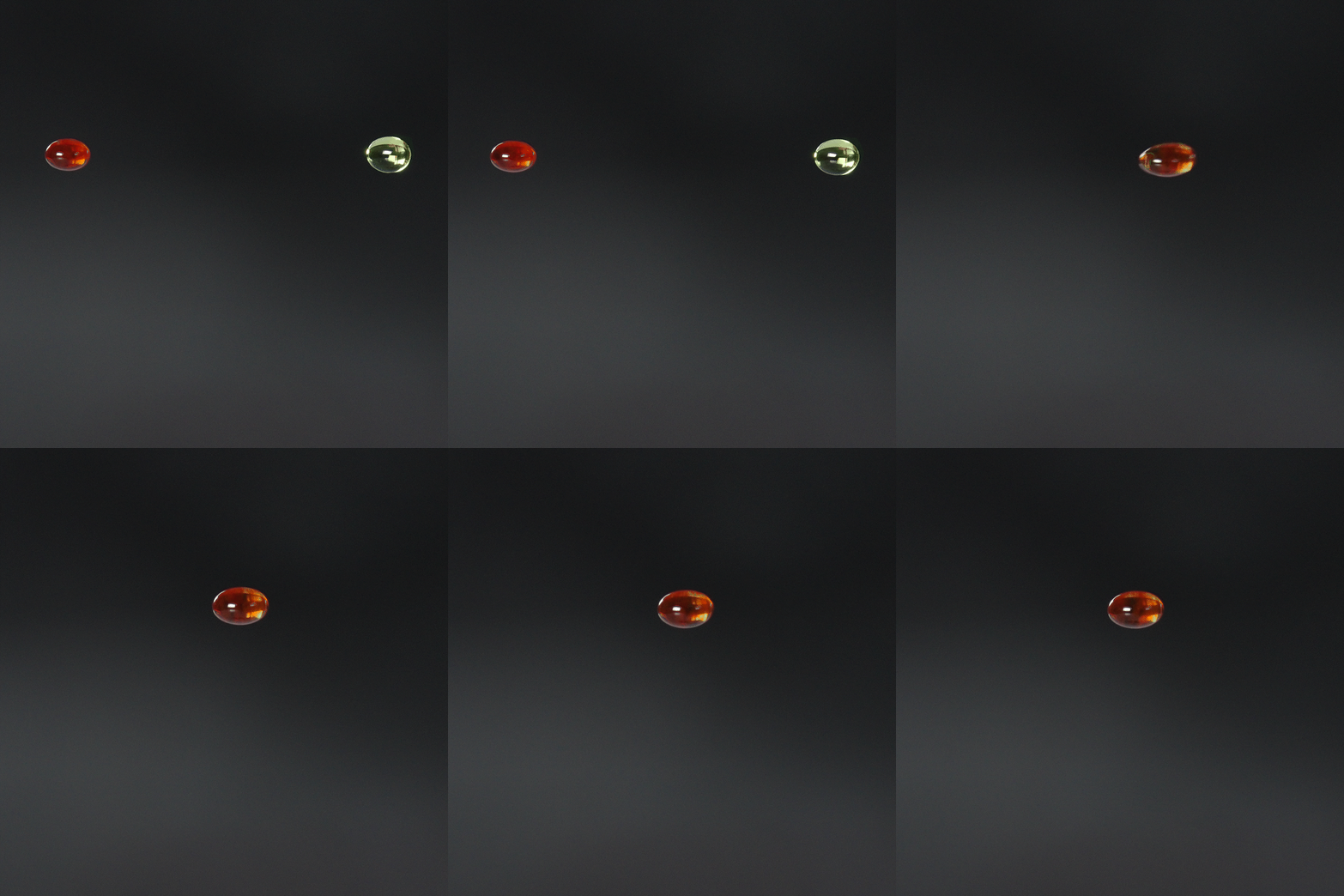
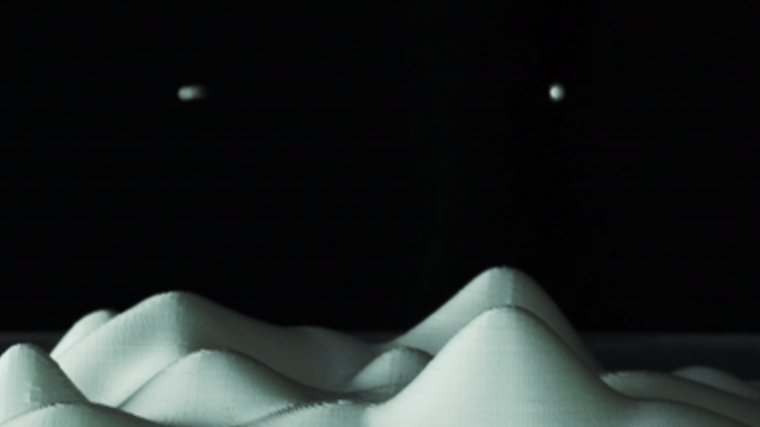
AcoustoFab uses holographic acoustic fields to create programmable pressure traps in air. These traps can hold and move low-volume droplets without direct contact. Instead of routing protein samples through tips, tubes, and channels, researchers can perform key handling operations in a contactless environment.
-
![Sign language saying 'Please do not disturb' with a hand gesture and a horizontal line across it.]()
Contactless Sample Positioning
Hold droplets in free space for observation, analysis, mixing, or deposition.
-
![Illustration of a stylized blue oval shape with dotted black lines forming an internal loop, connected to the text 'NEEDLE' on the left and 'DRUGS' on the right.]()
Mid-Air Merging and Reaction Initiation
Bring droplets together to initiate lysis, dilution, digestion, binding, crystallisation, or kinetic studies with precise timing.
-
![Diagram of a microcontroller with labeled pins, connections, and a central crosshair symbol.]()
Programmable 3D Motion
Move samples along defined XYZ trajectories for sequential workflows, reagent addition, or analytical interrogation.
-
![Blue microscope icon with the words "Science Lab" above it.]()
Direct Optical and Analytical Access
Maintain clear access to the sample for microscopy, imaging, spectroscopy, and other real-time monitoring techniques.
-
![A logo featuring a shield with an orange background and a black checkmark in the center.]()
Reduced Surface Exposure
Minimise contact with labware during the most sensitive stages of sample preparation and analysis.





Addressing the Precision Gap in Single-Cell Proteomics
When sample volumes shrink, the ratio of surface area to volume increases. This makes adsorption, evaporation, dead volume, and transfer losses much more significant.
Even advanced automation systems can struggle with: sample loss during transfer, adsorption to microplates, tubes, and tips, shear and wall effects in microfluidic channels, carryover in fluidic pathways, concentration changes due to evaporation, poor access for real-time observation, variability in manual or semi-automated handling steps. These are not minor inefficiencies. They can define the practical limits of the workflow.


The AcoustoFab Approach
Alchema Research adds a surface-free processing zone to proteomics workflows. Using programmable acoustic manipulation, researchers can perform contactless droplet operations in mid-air, reducing the number of surfaces and transfers involved in sensitive sample preparation steps.
This enables: lower-loss handling of scarce samples, controlled reagent addition and droplet merging, timed reaction initiation, direct observation during sample processing, workflow development without custom microfluidic chips, containerless experiments for crystallisation, folding, and kinetic studies.
AcoustoFab is not simply replacing one pipetting step. It enables a different class of experiment, where the sample is no longer defined by the walls that contain it.
The Benefits for Proteomics and Structural Biology
-

Higher Sample Recovery
Reduce adsorption and dead volume losses by minimising contact with tips, tubes, wells, and channels during sensitive handling steps.
-

Better Protein Integrity
Protect delicate biomolecules from unnecessary interfaces that can contribute to denaturation, aggregation, or conformational changes.
-

Cleaner Experimental Conditions
Reduce container-driven artefacts and carryover, supporting more reproducible protein analysis and low-volume assays.
-

Direct Real-Time Observation
Keep samples accessible for microscopy, spectroscopy, imaging, and optical monitoring throughout the workflow.
-

Controlled Reaction Timing
Initiate reactions, mixing, dilution, or crystallisation events through programmable droplet merging in free space.
-

Compatible with Workflow Development
Explore new sample preparation protocols without designing custom chips, fixtures, or fluidic pathways for every experiment.

Evidence from Life Sciences Research
Acoustic levitation has been used across life sciences and analytical research to study droplets, biological systems, crystallisation, reactions, and contactless sample handling.
Resources
-
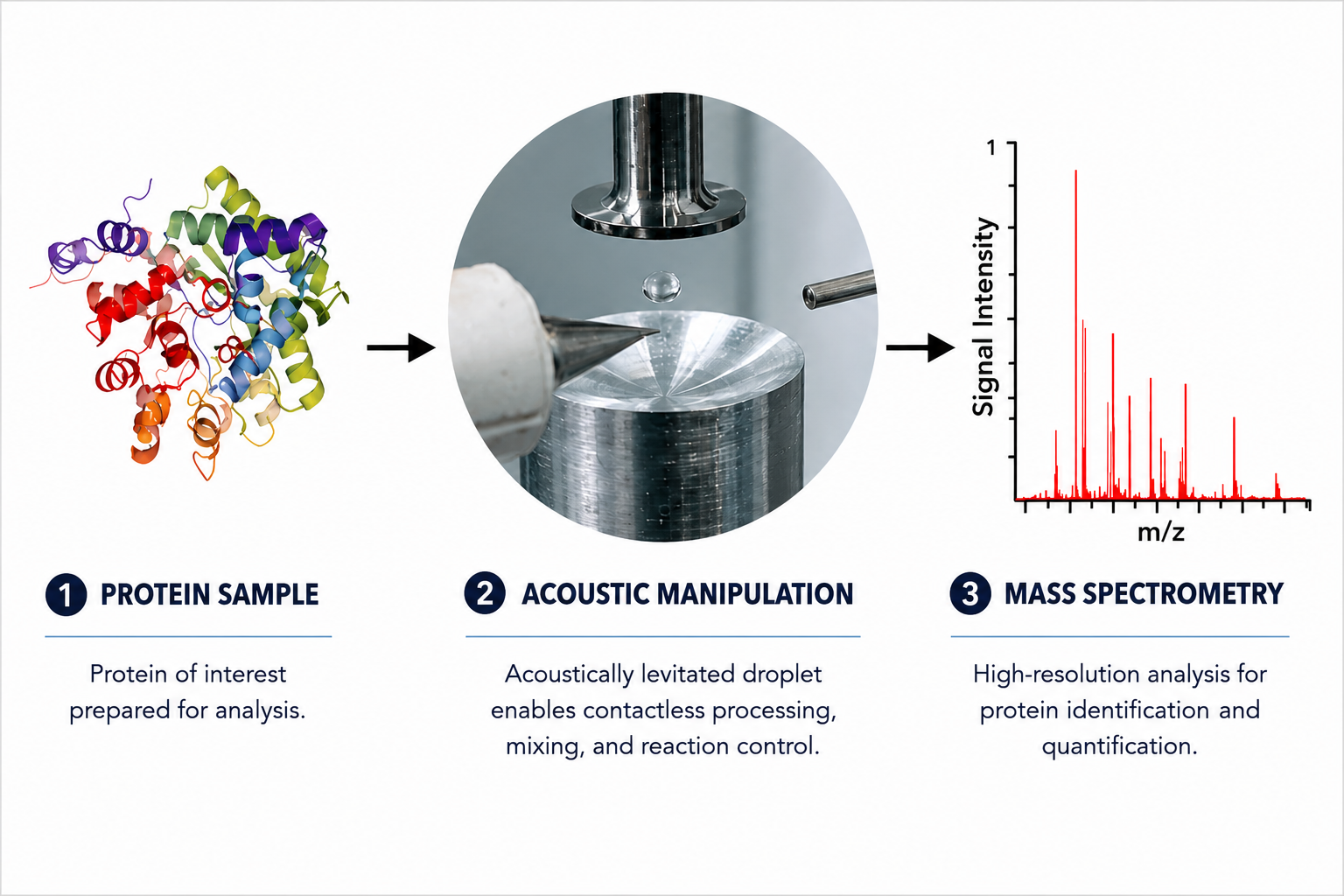
Read Miniaturised Protein Digestion Using Acoustic Levitation with Mass Spectrometry
-
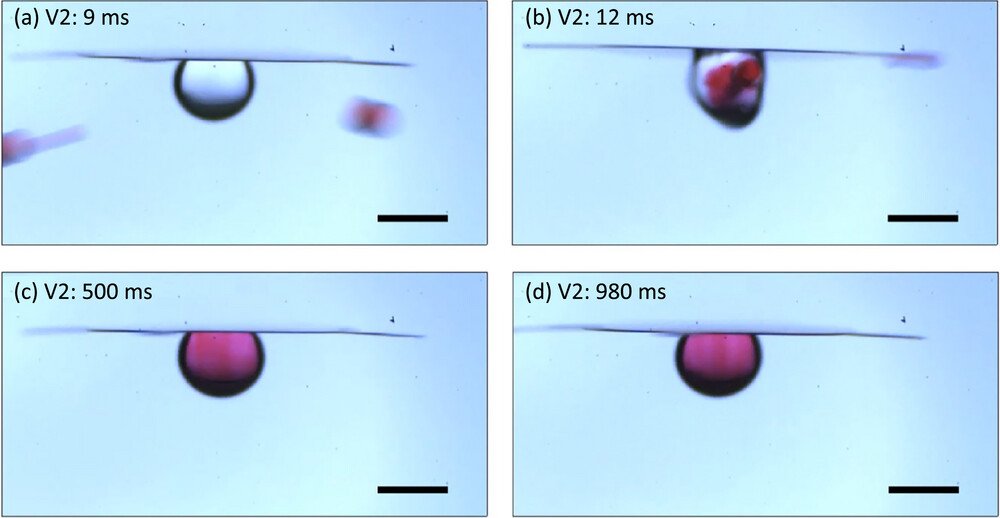
Read Inertial Mixing of Levitated Droplets for Time-Lapse Protein Crystallography
-
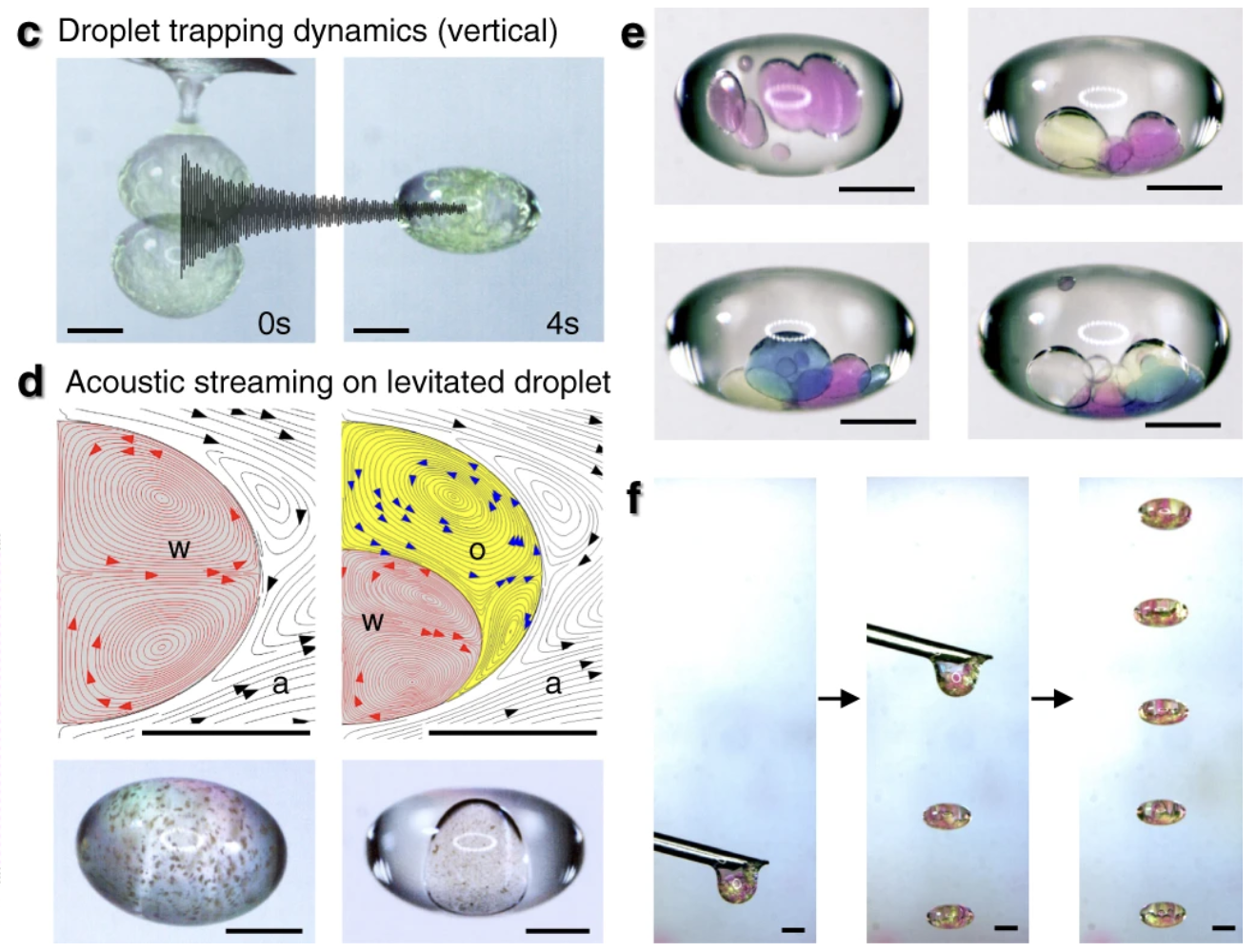
Read Programmable Multicompartment Artificial Cells & Remotely Activated Protein Channels
-
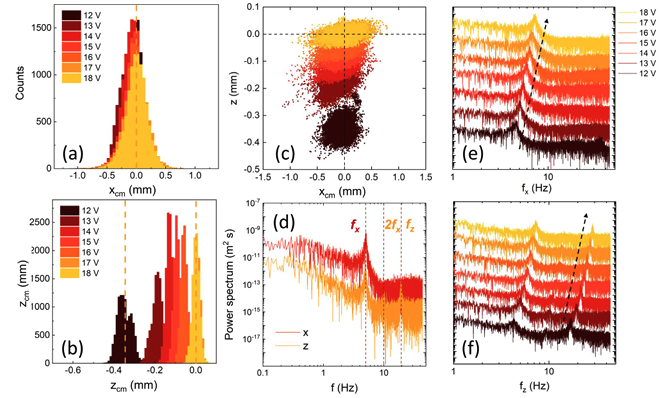
Read Contactless Manipulation and Raman Analysis of Cometary Analogs and Micrometeorites
-
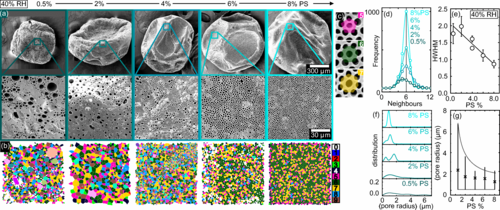
READ Contactless Polymer Droplet Drying and Porous Capsule Formation
-
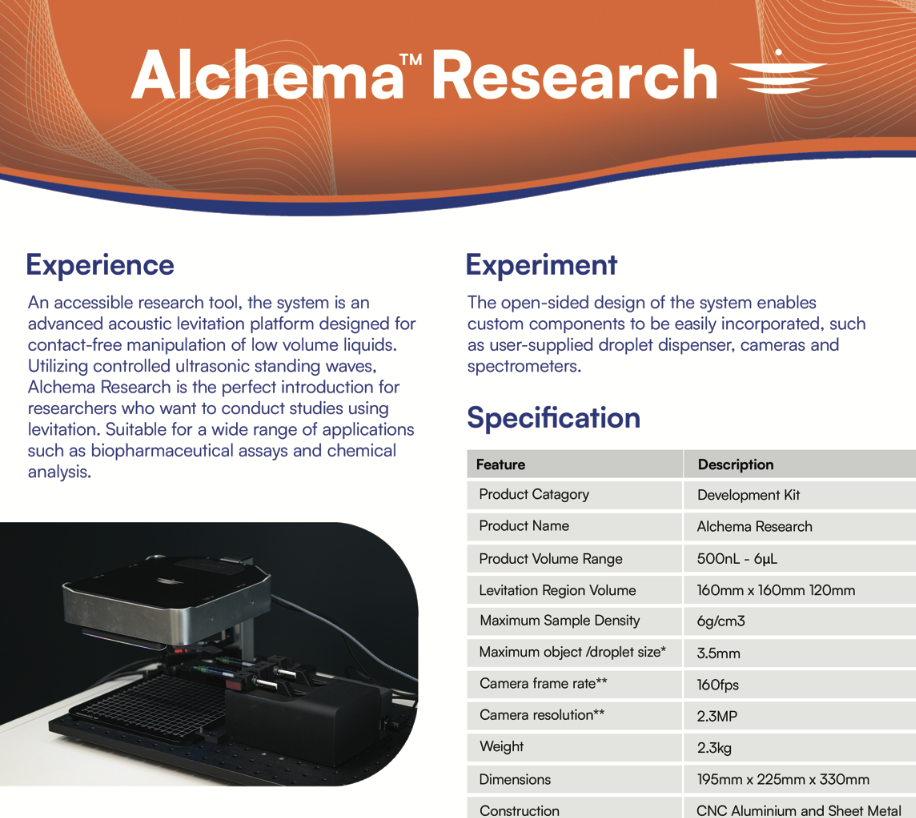
Download the Alchema Research Product Brochure
From Proteomics Workflow to Platform Integration
AcoustoFab enables both immediate exploratory use and longer-term system integration.
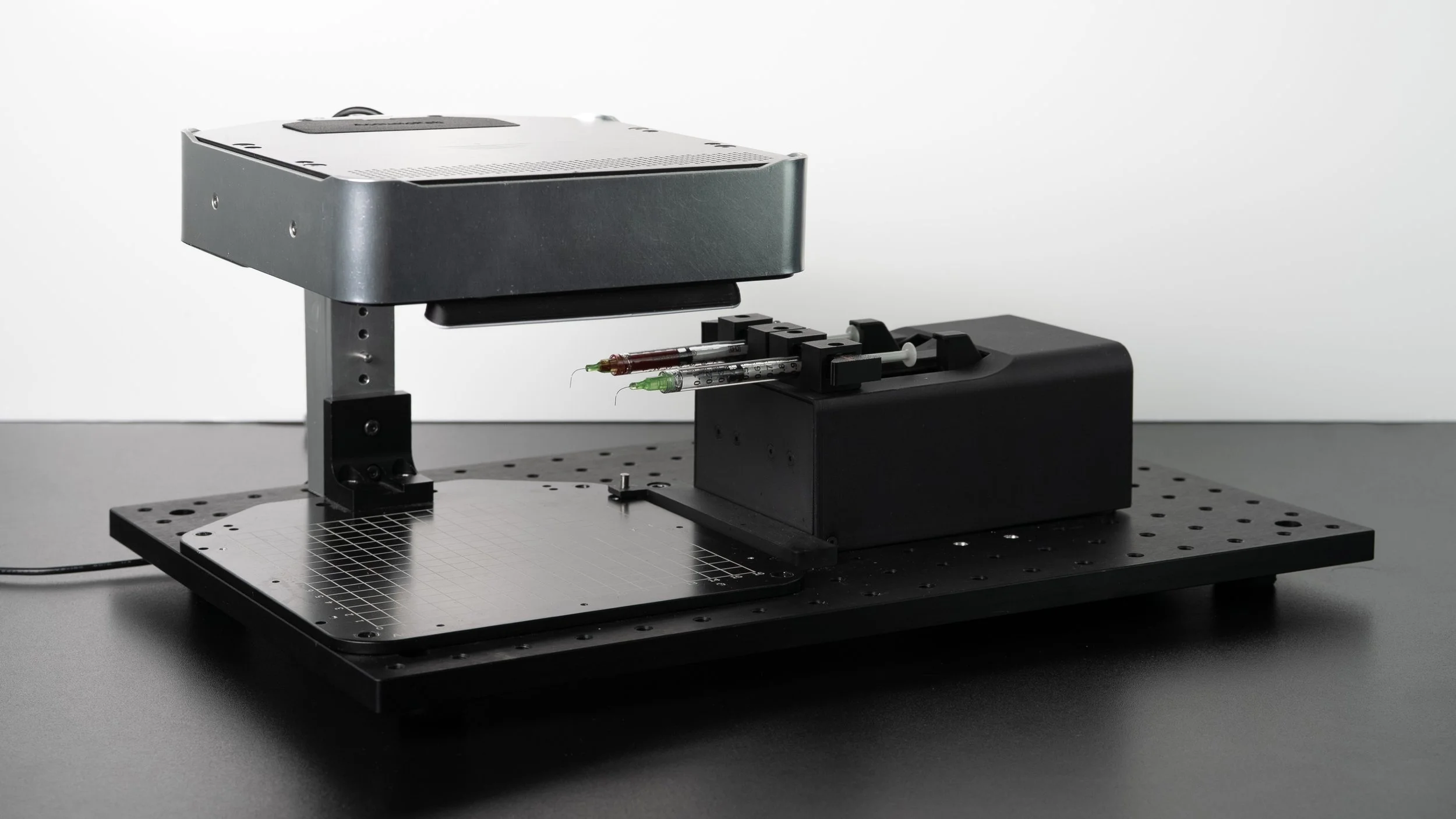
Alchema Research
A complete containerless sample-handling platform for low-volume droplets and fragile samples.
Alchema Research supports workflows such as droplet dispensing, holding, merging, movement, deposition, and optical observation, making it suitable for early-stage proteomics, crystallography, and analytical workflow development.
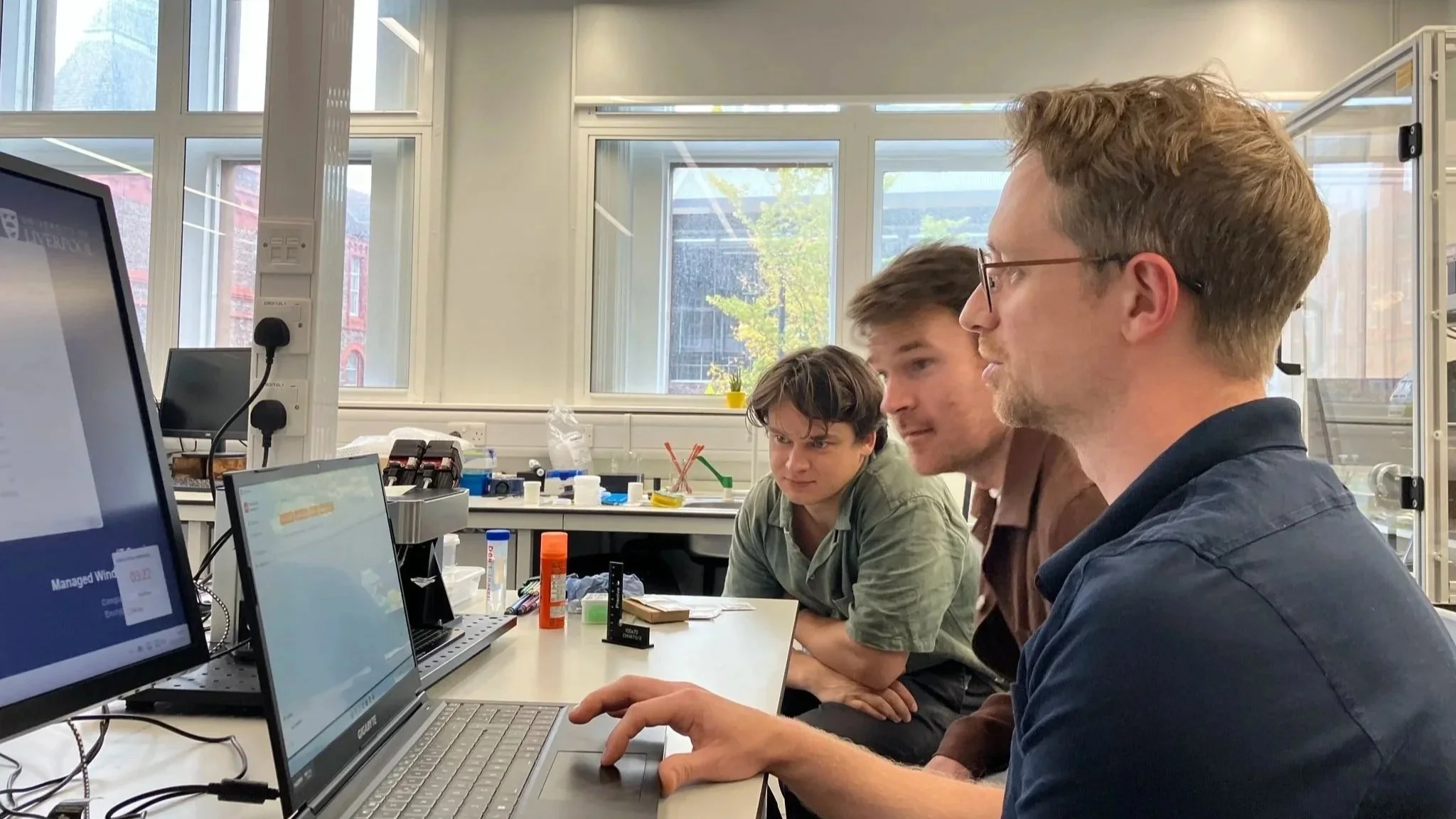
Co-Development
Work with AcoustoFab’s engineering team to adapt acoustic workflows for specific assays, instruments, or integration requirements.
Co-development can support:
assay-specific acoustic field optimisation
integration with imaging and spectroscopy
workflow development for crystallography or kinetic studies
sample transfer into downstream analytical pipelines
custom automation and OEM integration
Why Proteomics Is Moving Beyond Containers
Microfluidics reduced volume. Automation increased throughput. Neither fully solved the surface problem.
For many proteomics workflows, the challenge is no longer just moving smaller volumes faster. It is preserving the sample from the moment it is prepared to the moment it is analysed.
Researchers exploring alternatives to microfluidics, reduced protein adsorption, improved protein sample recovery, or surface-free crystallisation are asking the same question.
FAQs
-
Acoustic levitation enables contactless handling of low-volume droplets, reducing contact with surfaces that can cause adsorption, denaturation, dead volume loss, and carryover. This is especially valuable in sensitive or scarce-sample workflows.
-
Yes, in workflows where sample loss is driven by adsorption or dead volume. By reducing contact with tips, wells, tubes, and channels, containerless handling can improve recovery of scarce biological material.
-
Containerless protein analysis means studying or processing protein-containing droplets without enclosing them in conventional labware during the relevant workflow step. The sample is held in free space by an acoustic field, allowing direct observation and reduced surface interaction.
-
Yes. Targeted proteomics often requires precise handling of small volumes and high-value samples. Acoustic manipulation can support controlled reagent addition, timed reaction initiation, and low-loss sample handling.
-
Yes. Single-cell proteomics is highly sensitive to sample loss and handling variability. Acoustic manipulation may support low-volume preparation workflows where reducing surfaces and dead volume is critical.
-
AcoustoFab systems are designed for stable low-volume droplet handling, including holding, movement, and merging operations. Stability depends on droplet size, composition, density, evaporation behaviour, and workflow conditions.
-
For selected workflows, it may provide an alternative to microfluidics. In others, it may complement microfluidic or liquid-handling systems by adding a containerless processing step where surface contact is especially problematic.
-
Yes. Alchema Research is designed with an open architecture and can be integrated with imaging systems, spectroscopy, microscopy, and custom analytical workflows. Integration with downstream mass spectrometry pipelines can be explored through co-development.


Ready to Reduce Sample Loss in Proteomics?
If your proteomics workflow is limited by adsorption, denaturation, contamination, or dead volume, the constraint may not be your assay. It may be your handling environment.
AcoustoFab enables contactless, containerless sample manipulation through Alchema Research: a software-defined platform for low-volume droplets, fragile samples, and high-fidelity experimental workflows.
Take Action
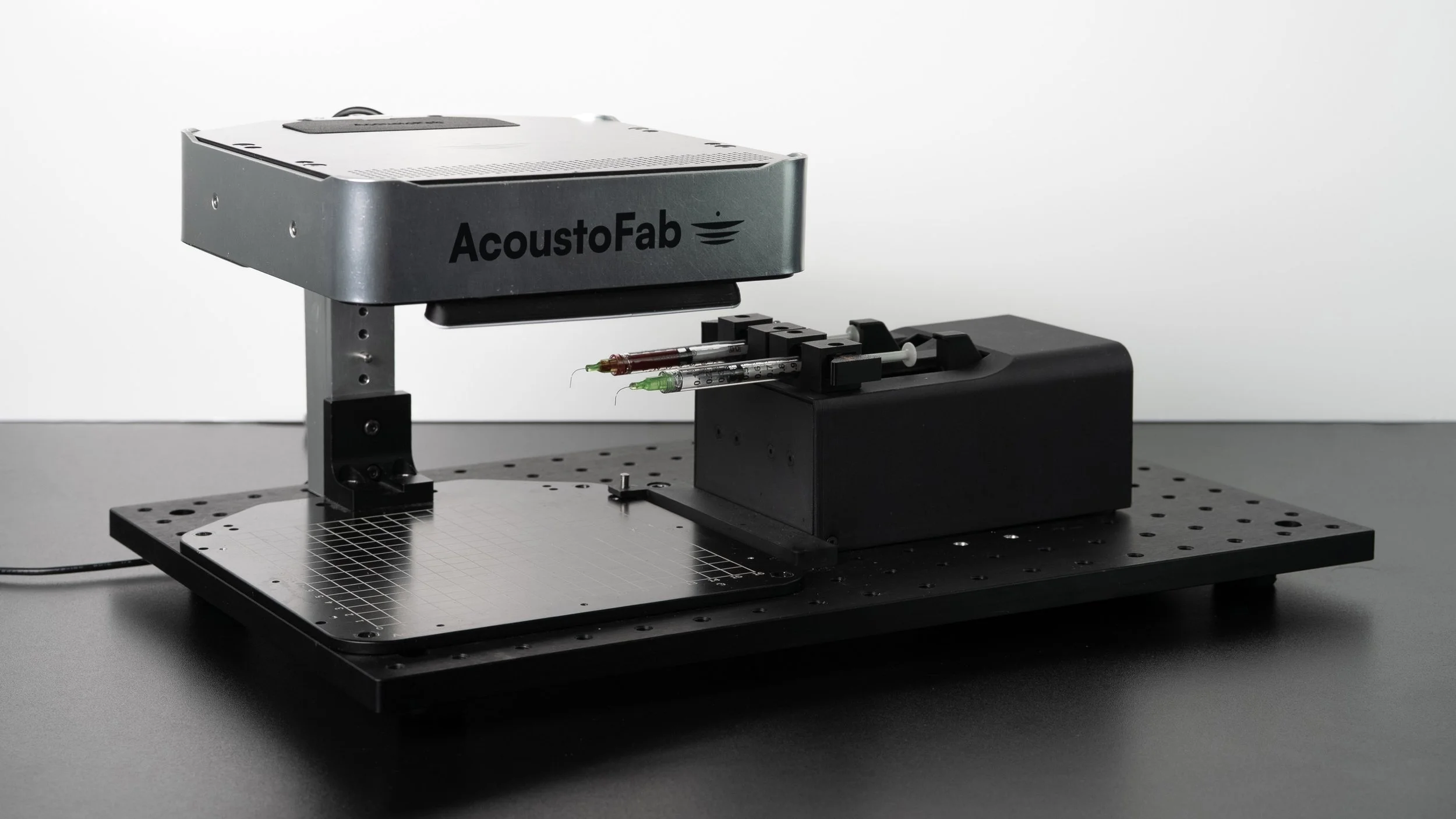
Explore Alchema Research
Programmable contact-free workflows for modern laboratories.
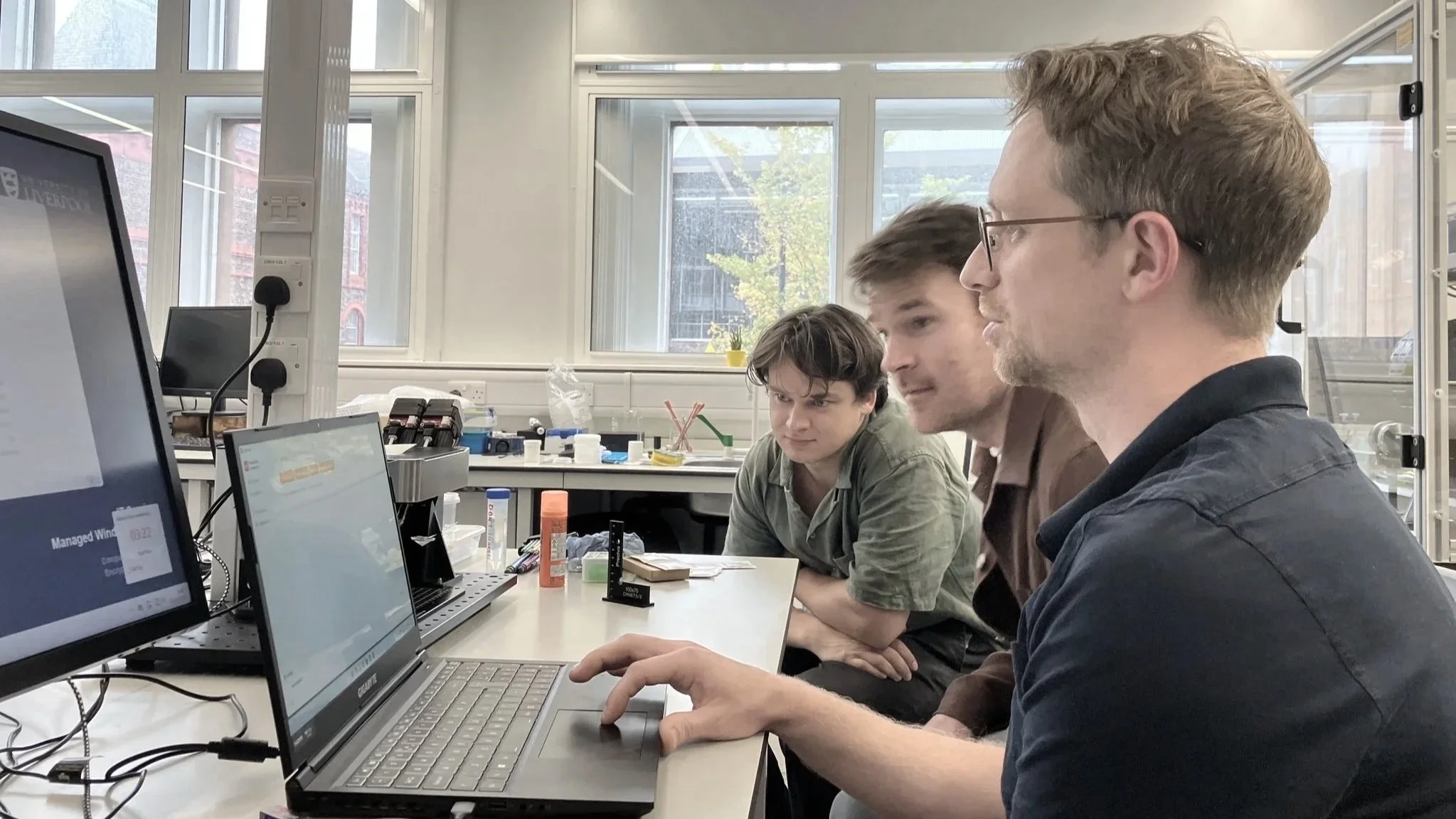
Partner With Us
Co-develop the future of acoustic automation.
Request a Feasibility Study
Assess the technical and commercial
fit for your application.