
Containerless Workflows for Advanced Materials Discovery
Modern materials science is increasingly driven by small-volume, high-information experiments. Researchers need to understand nucleation, solubility, drying, phase separation, crystallisation, formulation stability, and multi-material assembly with more precision than conventional tools can provide.
But many materials workflows are still constrained by containers. Vessel walls, substrates, nozzles, pipette tips, microplates, and channels can all interfere with material behaviour. They can trigger heterogeneous nucleation, distort evaporation, bias phase separation, introduce contamination, obstruct imaging, and limit access for in situ analysis.

Study Crystallisation, Phase Transitions, Formulations, and Multi-Material Systems Without Vessel Walls.
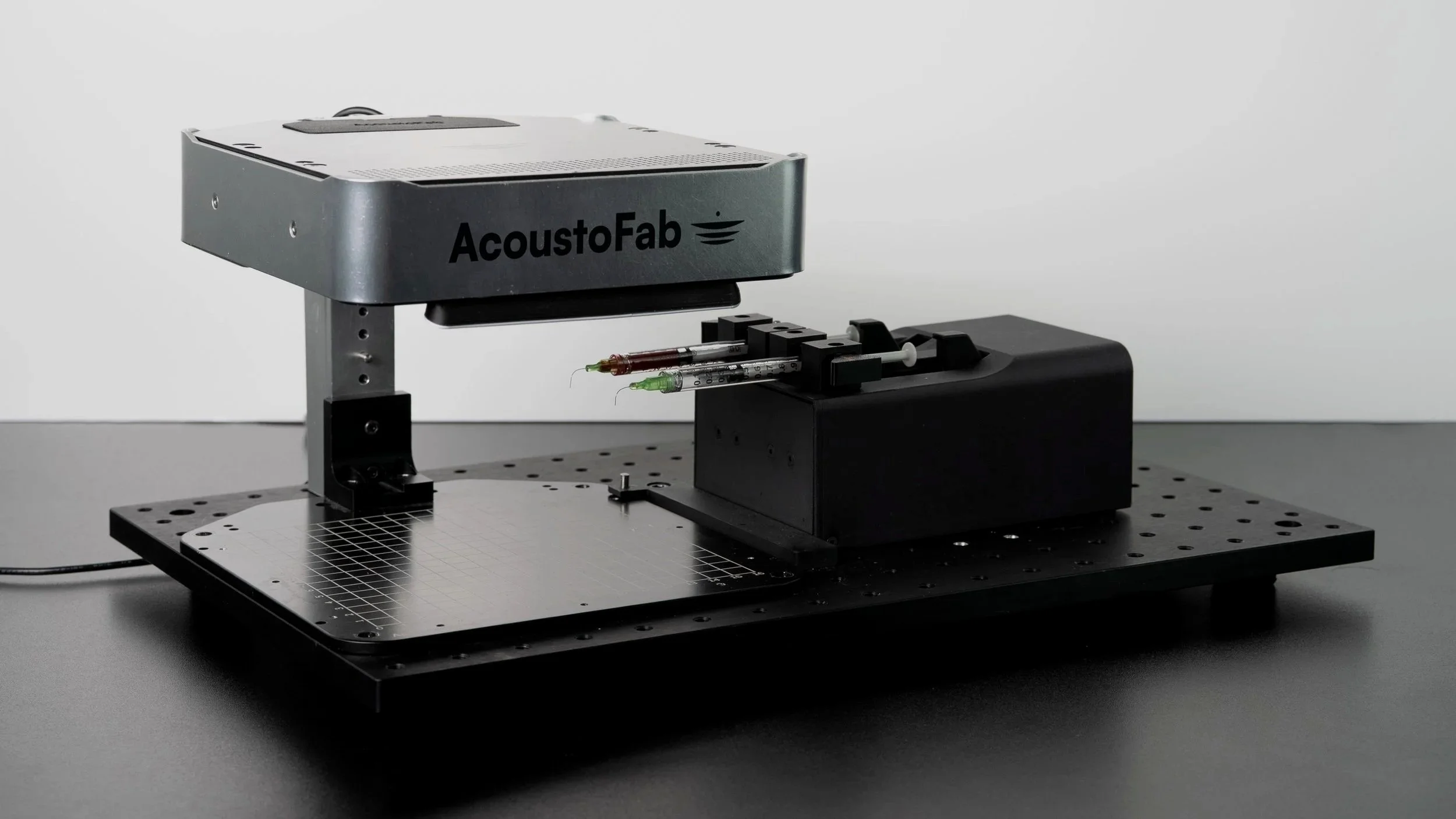
AcoustoFab introduces containerless workflows for advanced materials discovery using software-defined acoustic fields. Instead of studying materials only after they have interacted with a surface, researchers can suspend, merge, mix, dry, crystallise, observe, and deposit droplets, particles, gels, inks, and multi-phase systems in free space.
No vessel walls. No substrate artefacts. No nozzle-defined geometry.
For materials scientists, crystallographers, formulation teams, and advanced manufacturing researchers, the next frontier is not simply a better container.
The Container Problem in Materials R&D
Why Vessel Walls Distort Materials Discovery
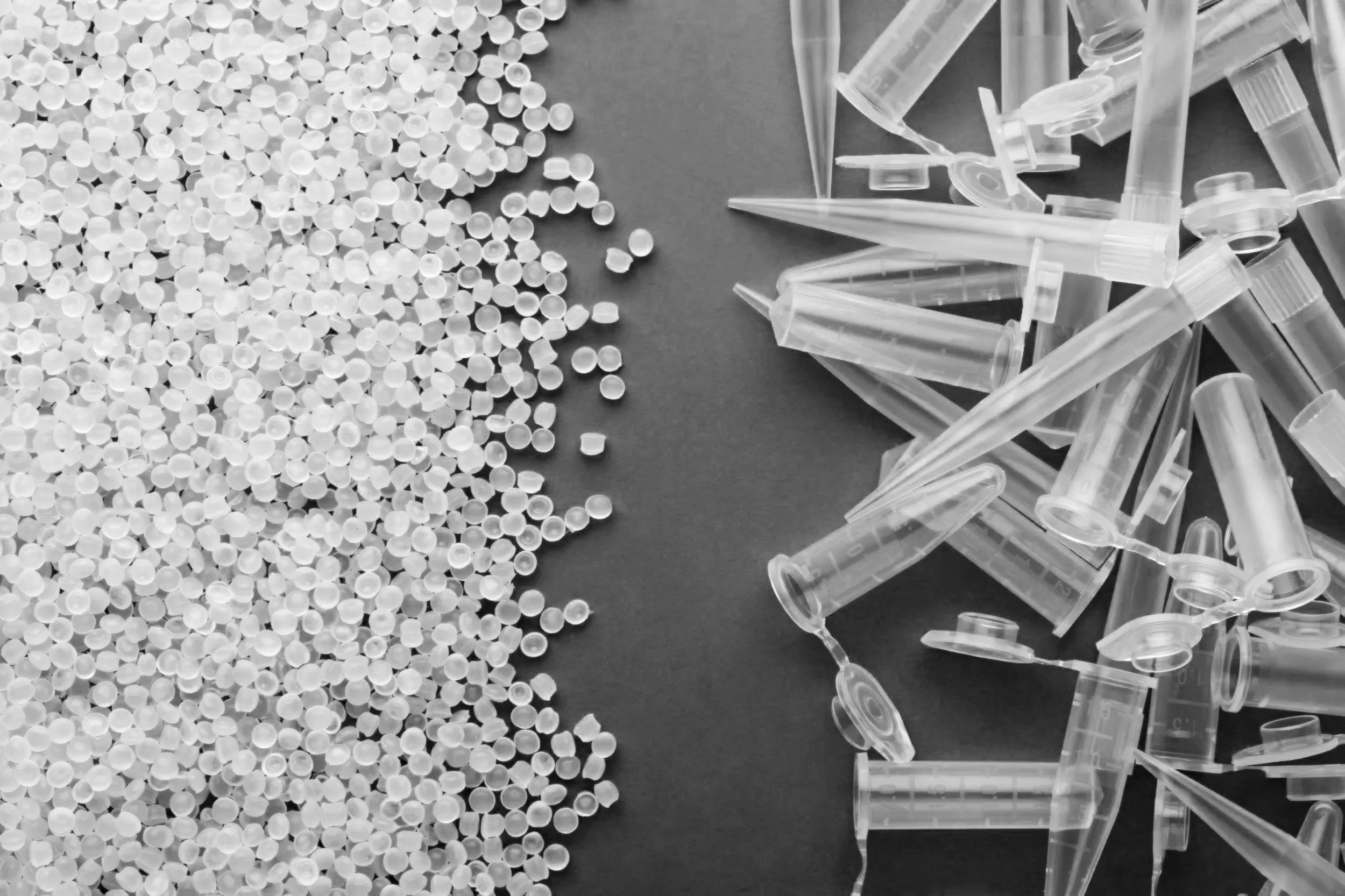
Materials do not only respond to chemistry, temperature, concentration, and time. They also respond to the environment that contains them. In conventional workflows, the container often becomes part of the experiment. This is especially important for crystallisation, solubility screening, particle formation, formulation studies, emulsions, gels, and multi-phase systems.
-
Wall-Induced Nucleation
Surface-Biased Phase Behaviour
Evaporation and Concentration Gradients
Substrate and Nozzle Artefacts
Contamination and Residue
Limited Optical and Analytical Access
These issues are amplified in: crystallisation screening, polymorph discovery, solubility studies, emulsion formulation, polymer droplets, hydrogel systems, capsule and particle formation, conductive inks, bioinks, soft materials, and multi-material fabrication research.
Researchers searching for containerless crystallisation, vessel-free solubility screening, substrate-free formulation studies, or in situ materials characterisation are often confronting the same underlying limitation: the wall.
Containerless Materials Handling with Acoustic Levitation
AcoustoFab uses holographic acoustic fields to create programmable pressure regions in air. These fields can hold and move droplets, particles, soft materials, gels, inks, and multi-phase systems without physical contact. Instead of relying only on vessels, nozzles, or substrates, researchers can explore materials workflows where acoustic fields help position, merge, mix, observe, dry, crystallise, or deposit samples in a wall-less environment.
-
![Warning sign of a hand with a slash through it, indicating no contact or handling allowed.]()
Contactless Droplet Positioning
Hold droplets, emulsions, formulations, gels, or reactive mixtures in free space for observation, analysis, drying, crystallisation, or deposition.
-
![A logo featuring a stylized blue depiction of two blueberries with dotted lines indicating a harvest or selection process, accompanied by the text 'Blueberry Harvest' and a tagline 'Fresh from the farm.']()
Mid-Air Mixing and Formulation
Merge droplets or material phases in air to study reaction initiation, solubility, phase separation, precipitation, or formulation behaviour.
-
![A stylized graphic of a molecule with a central orange circle connected to five smaller orange circles.]()
Crystallisation and Nucleation Studies
Reduce wall-induced heterogeneous nucleation by removing vessel surfaces during selected crystallisation and phase-transition experiments.
-
![A blue number six with black circles on a white background.]()
Particle and Capsule Formation
Study drying, shell formation, self-assembly, and particle or capsule generation in levitated droplets without substrate contact.
-
![A logo featuring an orange microscope silhouette integrated into the letter 'D' on a black background.]()
Direct Optical and Analytical Access
Keep samples accessible for microscopy, imaging, spectroscopy, Raman analysis, thermal observation, X-ray studies, or other in situ characterisation methods.
-
![Icon of a microscope in blue and black outline style.]()
Contactless Deposition and Fabrication
Explore how droplets, hydrogels, conductive inks, bioinks, or soft materials can be deposited onto target surfaces without conventional nozzle contact.


Addressing the Precision Gap in Materials Screening
When material volumes shrink, conventional containers become more influential.
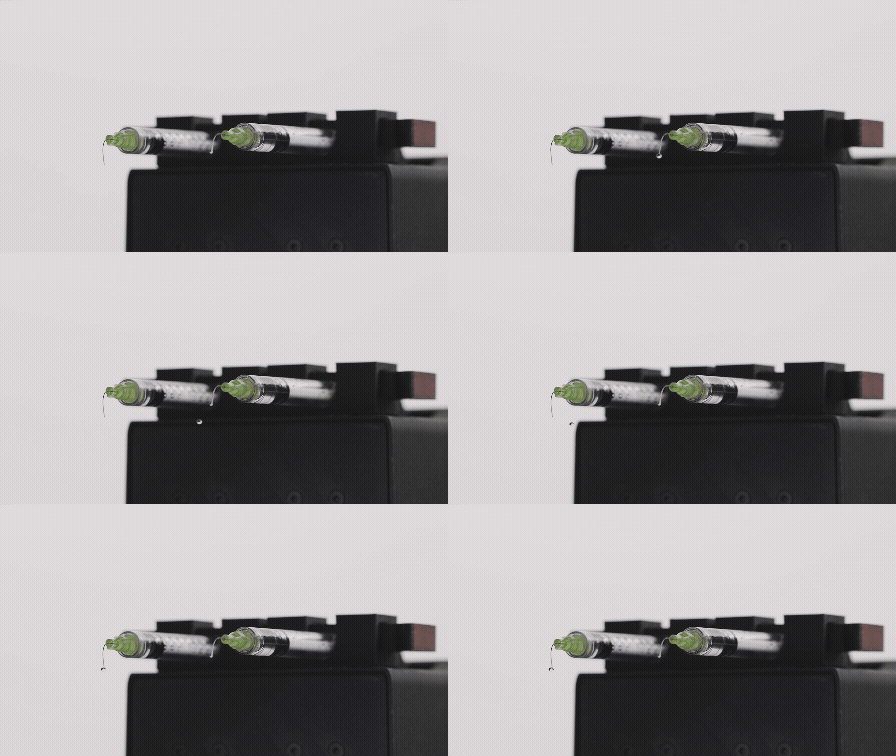
A microlitre-scale crystallisation experiment may be dominated by wall-induced nucleation. A drying droplet may behave differently on a substrate than in free space. A formulation may phase-separate, crystallise, or skin-form differently depending on its contact angle, surface chemistry, evaporation profile, or local contamination. A nozzle may shear, clog, contaminate, or restrict the materials that can be processed.
Even advanced materials automation systems can struggle with: vessel-wall effects, uncontrolled nucleation sites, substrate pinning, drying artefacts, poor optical access, nozzle clogging, cross-contamination, residue loss, limited multi-material compatibility, and difficulty studying transient or metastable states.
These are not minor artefacts. In crystallisation, formulation science, soft materials, advanced manufacturing, and pharmaceutical development, they can determine which phase forms, which structure is observed, and which formulation appears stable.


The AcoustoFab Approach
Alchema Research adds a containerless processing zone to advanced materials workflows.
Using programmable acoustic manipulation, researchers can study droplets, formulations, particles, and soft materials in free space, reducing the number of surfaces and contact steps involved in sensitive experiments.
This enables: reduced wall-induced nucleation, direct observation of drying and crystallisation, controlled droplet merging and formulation studies, multi-phase material manipulation, low-volume screening, in situ optical and spectroscopic monitoring, and exploratory contactless deposition workflows.
AcoustoFab is not simply replacing a vial, well, or nozzle. It enables a different class of materials experiment, where the sample can be studied before the container defines the result.
The Benefits for Advanced Materials and Formulation Workflows
-

Reduced Wall-Induced Artefacts
Minimise vessel, substrate, and nozzle effects during sensitive crystallisation, formulation, phase-transition, or drying studies.
-

Lower Material Consumption
Run exploratory screening workflows at low volumes, reducing waste when working with expensive, scarce, or experimental materials.
-

Direct In Situ Observation
Keep samples accessible for microscopy, imaging, spectroscopy, Raman analysis, thermal monitoring, or other real-time analytical techniques.
-

Controlled Phase and Nucleation Studies
Explore crystallisation, precipitation, phase separation, supercooling, drying, and metastable behaviour with reduced wall interference.
-

Multi-Material Compatibility
Work with droplets, hydrogels, inks, emulsions, soft materials, particles, and composite systems in a programmable acoustic environment.
-

Contactless Fabrication Pathways
Investigate acoustic deposition, droplet-based fabrication, non-planar printing, and multi-material assembly without relying solely on conventional nozzles or substrates.
Evidence from Advanced Materials and Contactless Fabrication Research
Acoustic levitation and acoustic manipulation have been used to study and process materials in ways that are difficult to achieve with conventional vessels, nozzles, or substrates.
Resources
-
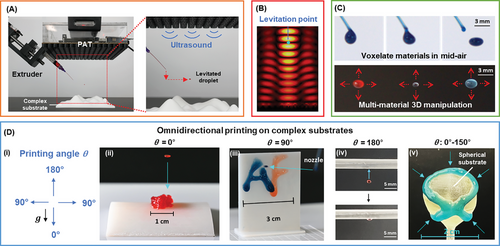
Read Omnidirectional and Multi-Material In Situ 3D Printing Using Acoustic Levitation
-
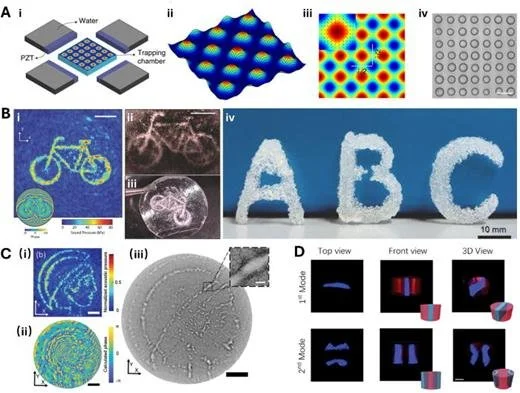
Read Acoustics in Additive Manufacturing: Contactless, Scalable, and High-Precision Manufacturing
-
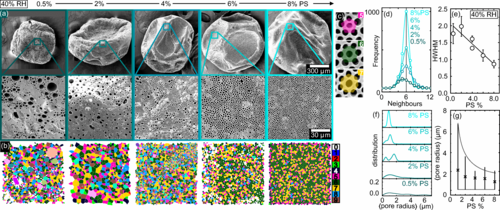
Read Polymer Particle and Capsule Formation in Acoustically Levitated Droplets
-
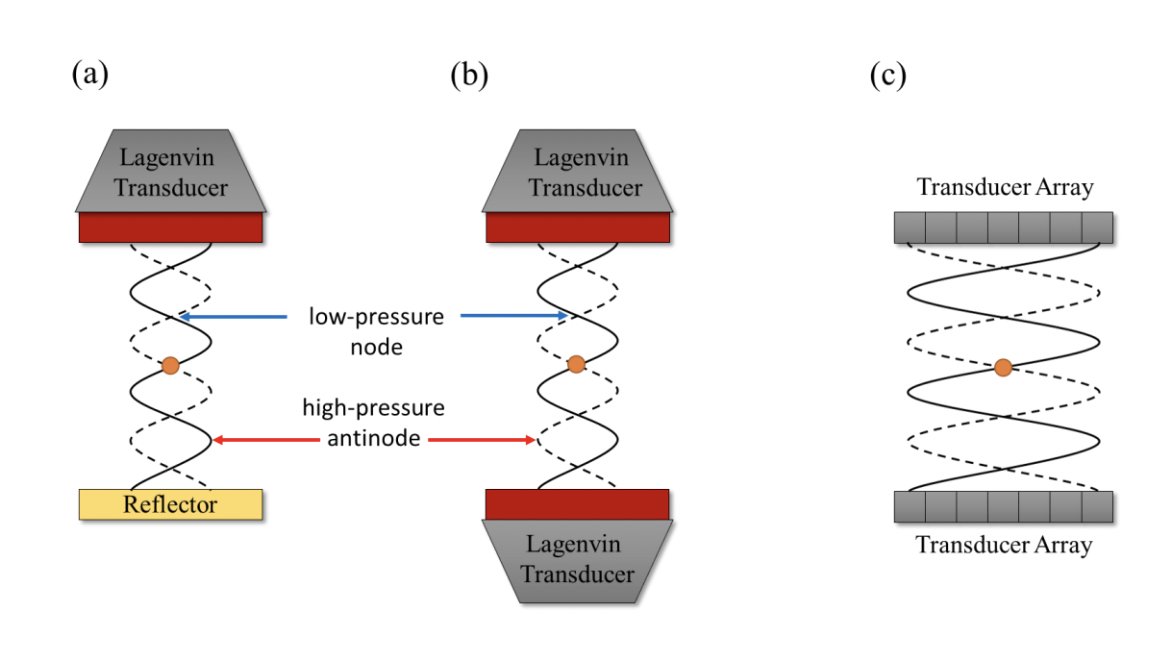
Read Complex Droplet Physics in Acoustic Levitation
-
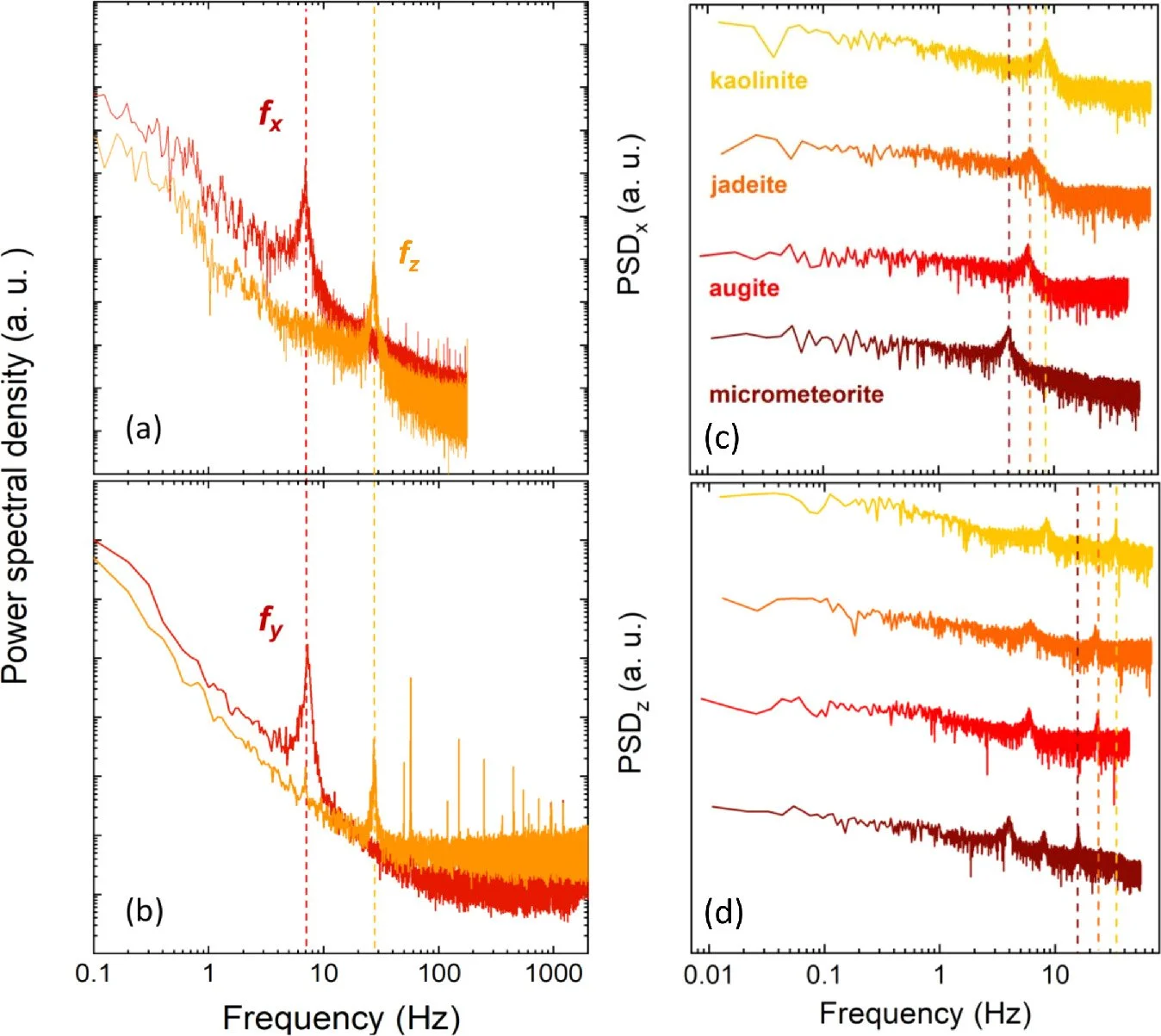
Read Contactless Materials Characterisation in Acoustic Levitation
-
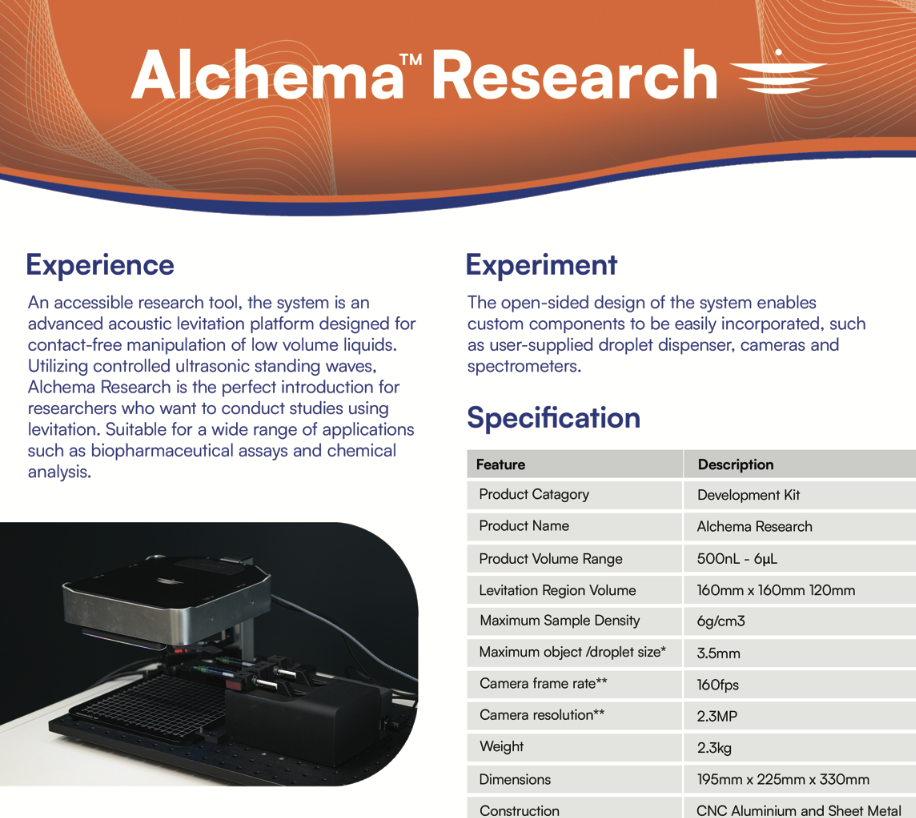
Download the Alchema Research Product Brochure
From Materials Workflow to Platform Integration
AcoustoFab enables both immediate exploratory use and longer-term workflow development.
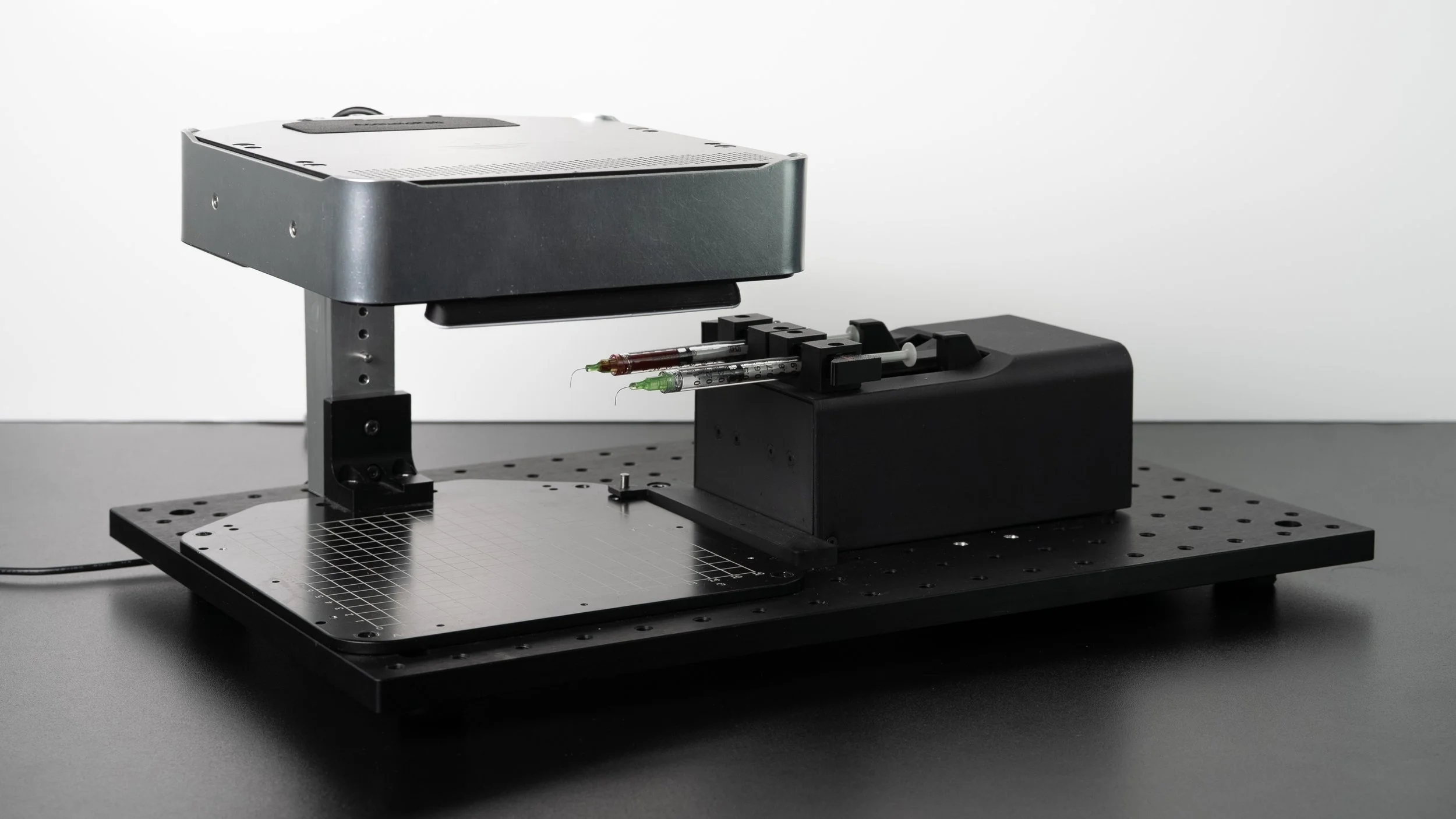
Alchema Research
A programmable contactless handling platform for low-volume droplets, fragile solids, particles, and advanced materials workflows.
Alchema Research supports operations such as dispensing, holding, moving, merging, depositing, and observing small samples in free space, making it suitable for early-stage exploration of crystallisation, solubility, formulation, phase transition, drying, and contactless deposition workflows.
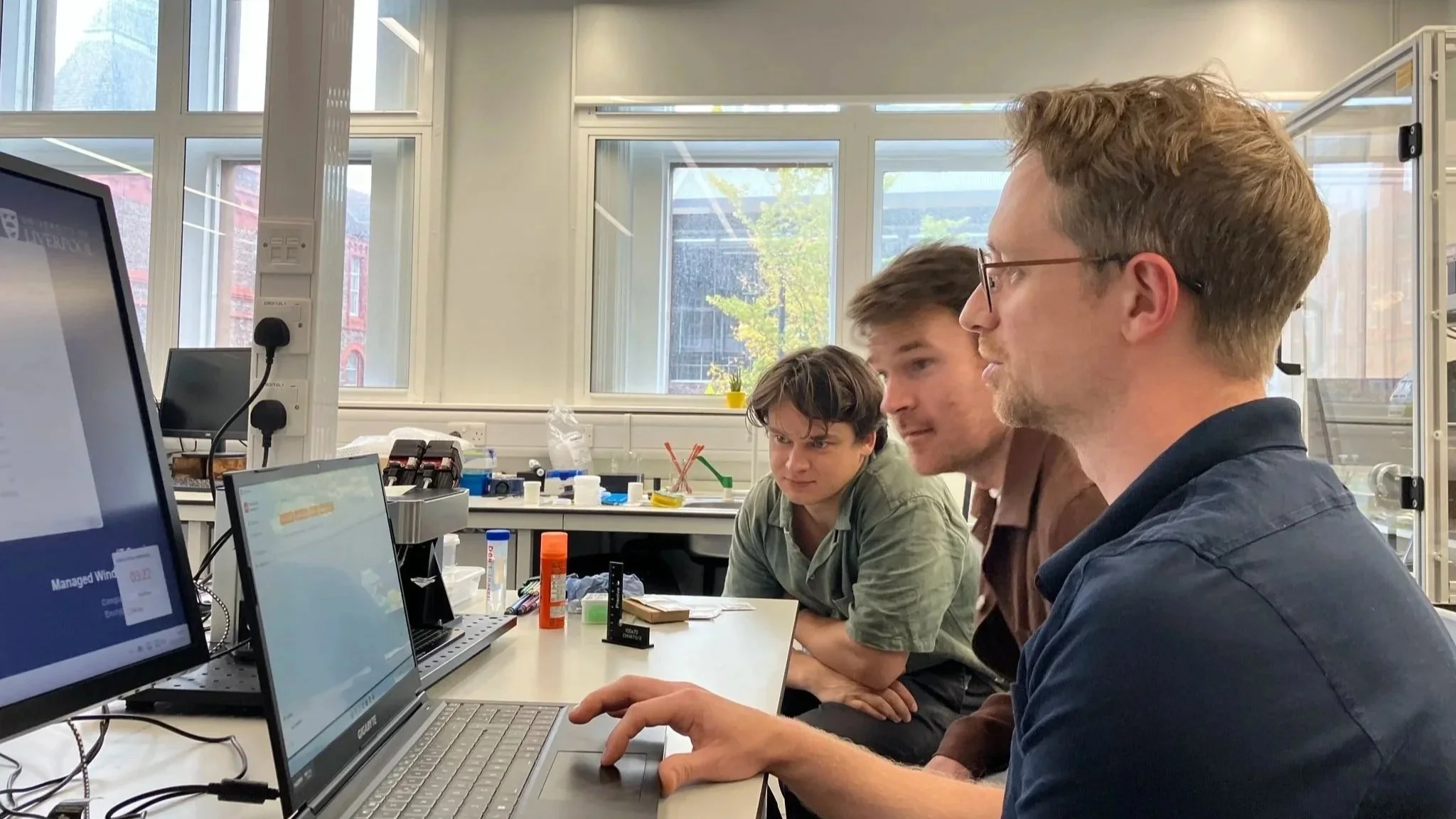
Co-Development
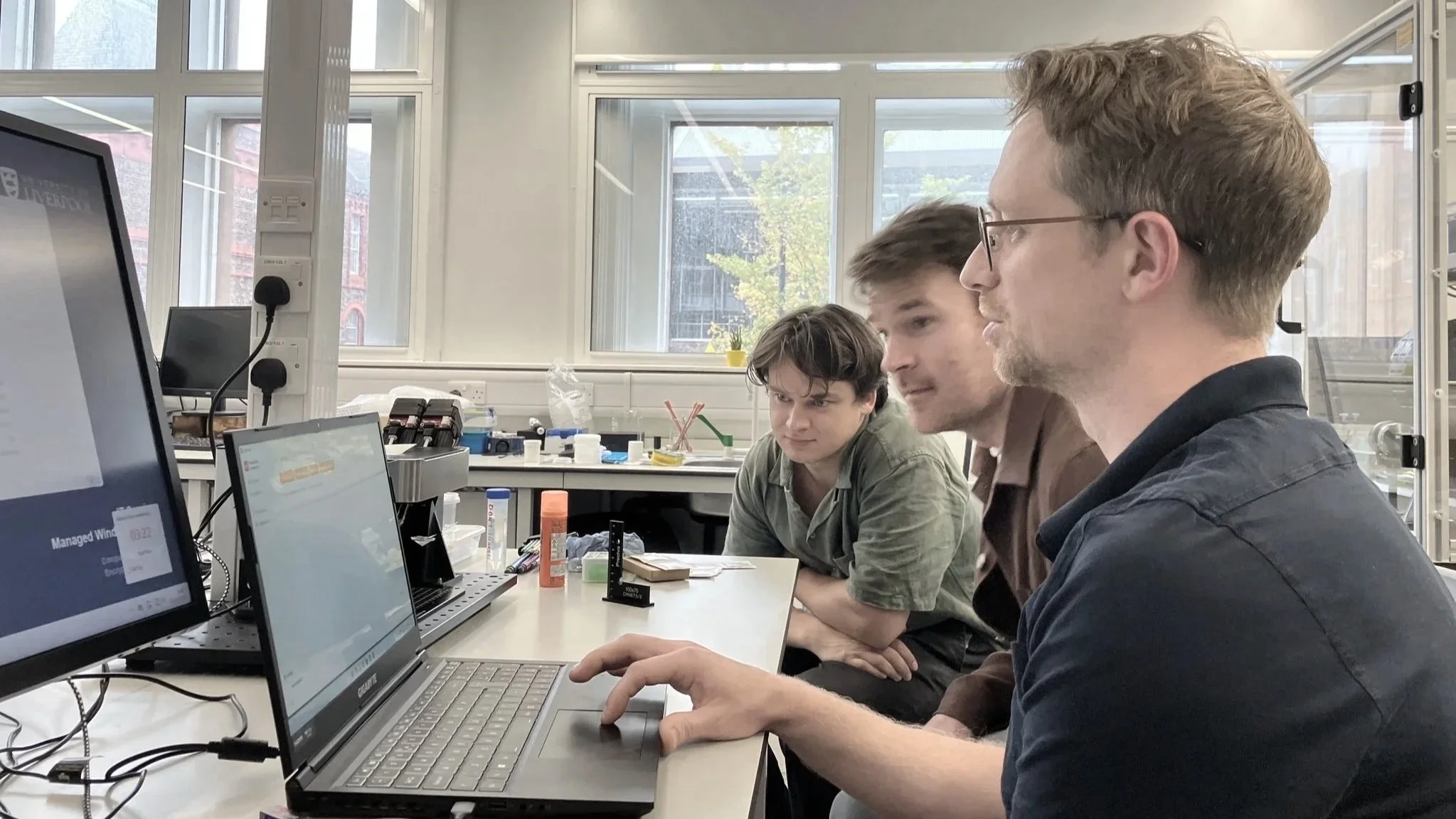
Work with AcoustoFab’s engineering team to adapt acoustic workflows for specific materials, formulations, instruments, or integration requirements.
Co-development can support:
acoustic field optimisation for droplet size, density, viscosity, and surface tension
crystallisation and solubility screening workflows
formulation, drying, and phase-transition studies
integration with microscopy, Raman, spectroscopy, imaging, or X-ray workflows
environmental control for humidity, temperature, evaporation, and atmosphere
contactless deposition and multi-material fabrication experiments
custom automation and OEM integration
Why Materials Science Is Moving Beyond Containers
Vials improved convenience. Microplates improved throughput. Microfluidics reduced volume. Nozzles enabled automated deposition.
But containers and contact tools still shape material behaviour.
For many advanced materials workflows, the challenge is no longer just making experiments smaller or faster. It is understanding what the material does before vessel walls, surfaces, nozzles, or substrates change the outcome.
Researchers exploring containerless crystallisation, wall-less solubility screening, free-droplet phase behaviour, substrate-free drying, or contactless fabrication are asking the same question.
FAQs
-
Containerless materials discovery means studying or processing droplets, particles, formulations, or soft materials without enclosing them in conventional vessels during the relevant experimental step. Acoustic fields hold the sample in free space, reducing wall and substrate effects while maintaining analytical access
-
Acoustic levitation can reduce wall-induced heterogeneous nucleation by removing vessel surfaces from selected crystallisation workflows. This can help researchers study nucleation, precipitation, solubility, and phase behaviour under more controlled conditions
-
No. Acoustic levitation removes vessel-wall contact, but acoustic fields can still influence evaporation, internal flow, droplet shape, heat transfer, and mass transfer. These effects should be characterised and controlled as part of the experimental design.
-
Yes. Low-volume droplets can be used to explore dissolution, precipitation, concentration change, and crystallisation behaviour with reduced contact with vessel walls. Environmental control may be required for humidity, evaporation, and temperature-sensitive workflows.
-
Potential materials include crystallising solutions, polymer droplets, emulsions, hydrogels, bioinks, conductive inks, soft materials, particles, capsules, formulation droplets, and multi-phase systems. The operating window depends on density, viscosity, surface tension, volatility, size, and acoustic response
-
Yes. The open geometry enables direct optical and analytical access. Alchema Research can be configured for workflows involving microscopy, imaging, spectroscopy, Raman analysis, and other non-contact or minimally invasive measurement techniques.
-
Potentially, yes. Acoustic levitation has been used in research contexts for contactless sample presentation and X-ray-compatible studies. Integration depends on beamline geometry, sample type, acoustic hardware configuration, and experimental constraints.
-
Yes. Levitated droplets can be used to study drying, skin formation, phase separation, particle formation, capsule formation, and related formulation phenomena without substrate contact.


Ready to Discover Materials Beyond the Container?
If your materials workflow is limited by vessel walls, substrate artefacts, nozzle constraints, contamination, or poor observability, the constraint may not be your formulation.
It may be your experimental environment.
AcoustoFab enables containerless materials discovery through Alchema Research: a software-defined platform for low-volume droplets, particles, formulations, and multi-material systems.
Take Action
Explore Alchema Research
Software defined acoustic leviation
Partner With Us
Let’s co-develop and collaborate
Request a Feasibility Study
Get in touch with an engineer